
Further stalls important weather research program
Aug 26, 2025
This afternoon, the NOAA Acquisitions and Grants Office (AGO) posted on the official federal government contracting website, SAM.gov, that the procurement action for a new phased array radar (PAR) research instrument at the National Severe Storms Laboratory (NSSL) has been canceled.
Procurement of a new research radar was the next important planned programmatic step in NSSL’s PAR research program. The procurement process could restart, but not before sometime in 2026.
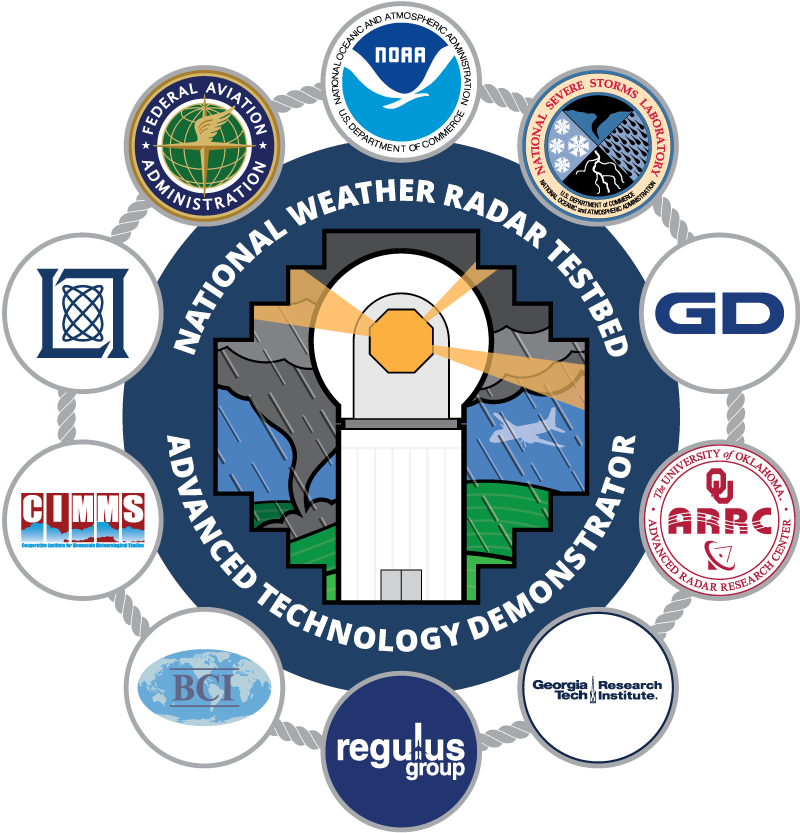
NSSL is currently using the Advanced Technology Demonstrator (ATD) to collect weather data for use in developing and evaluating PAR technology as a potential new weather radar technology. The ATD was the first polarimetric, S-band phased array weather radar and was developed by NSSL with academic and private sector partners after NSSL did extensive early PAR research using an SPY-1 phased array radar inherited from the Department of Defense. The ATD began being used for research in 2019.
PAR technology has several potential crucial advantages over the technology used in the current National Weather Service (NWS) operational Doppler weather radar network, the WSR-88D. Rather than the current mechanical radar which rotates 360 degrees to collect data, PAR is an electronic radar that has the capability to produce multiple radar beams that can be electronically directed and steered. This enables much more rapid scanning of storms as well as the ability to target specific storms.
Early PAR research with the SPY-1 radar in the 2010s showed that PAR data could potentially enable NWS forecasters to issue earlier warnings for thunderstorm related hazards such as tornadoes. The SPY-1 radar was not dual-polarized, which the current WSR-88D is. Dual-polarization is critical radar technology the NWS needs for a variety of meteorological and hydrologic applications. The ATD was developed to enable NSSL to do further research using dual-polarized PAR radar data — and better understand the potential engineering and calibration challenges associated with a dual-polarized phased array radar.
While the ATD has been an important proof-of-concept instrument, it is only a single face PAR radar, meaning it only can scan 90 degrees of the 360 degrees around the radar at any one time. In order to be used by the NWS and weather community operationally, a PAR weather radar would need to be able to continually scan the entire 360 degree field around a radar. To resolve this issue, NSSL researchers envision combining PAR and rotating antenna technology, i.e., a Rotating-PAR (R-PAR) weather radar. The procurement of an R&D radar based on this technology is what was canceled by NOAA today.
The WSR-88D network was deployed in the 1990s and is based on 1980s level technology. While the hardware and software for the radar system have been updated over the years, it is still aging technology, and the NWS is currently developing the Radar Next program to evaluate potential options for the next generation national weather radar network. PAR has been seen as a potential key technology for use in Radar Next. While PAR data collection and research with the ATD can and (I assume) will continue, the cancelation of the procurement on the new radar is obviously a setback in the potential development of this new weather radar technology.
This news about PAR is consistent with recent media reports, including a story today from Science magazine, indicating that the Trump administration — specifically the Office of Management and Budget (OMB) — is pushing forward with its plan to make significant cuts to NOAA as outlined in its FY2026 budget plan. As I have reported, Congress in its own initial FY26 budget development has shown significant opposition to these cuts — the draft of the House NOAA budget bill passed by the Appropriations Committee includes specific wording directing the procurement of the PAR R&D radar — but the administration appears to be moving forward with its plans regardless.
Science reports that nearly $100M of the funding allocated to the Office of Oceanic and Research (OAR, NOAA Research) for this fiscal year (2025) looks as if it will not be utilized by NOAA, essentially a 14% budget cut for the line office simply by not allocating or spending the funding appropriated by Congress. The funding for the PAR procurement canceled today was to come from multiple budget lines.
These cuts to OAR reported today are of course in addition to the major reductions to NOAA’s geostationary satellite program that OMB started in motion last week as first reported by CNN. OMB has proposed elimination of OAR in its planned FY26 budget, and per Science:
These cuts, which would hit basic science on the weather, oceans, and—especially—climate, represent a “down payment” on the White House’s proposal to eliminate NOAA’s research arm in the 2026 fiscal year that begins on 1 October, agency officials have told employees.
Department and agency specific budgets passed by Congress and signed by the President are almost certainly not going to be in place by October 1, meaning that the year will start under a continuing resolution. This will mean that the current budget environment and setup will continue into FY2026, giving the administration broad leeway in implementing its plans and priorities at least until budgets are passed and signed into law. Obviously, the next several months will be crucial in determining the future not only of NOAA but of other federal science agencies — I will continue to update the weather related science budget and agency developments here.
 Balanced Weather
Leave a comment