
DOE forced to disband DOE’s Climate Working Group because of FACA
Sep 12, 2025
I wanted to spend some time today sharing some personal experience about a federal law that has been in the news related to federal climate science. Earlier this week, it was reported that the Department of Energy had disbanded its small five-member Climate Working Group (CWG) that developed a controversial climate change report that the Environmental Protection Agency is using to try to repeal its endangerment finding that global warming is a threat to human health. More than 100 climate scientists recently released their own coordinated report rebutting much of the DOE report.
From what I can tell, it appears that scientist Roger Pielke Jr. initially reported the news of the CWG demise on his Substack, and it was then reported on by CNN. Andy Revkin did a nice follow-up Substack post detailing the situation as well that I would also encourage you to read. The central issue that resulted in the CWG being disbanded centers around the Federal Advisory Committee Act, more commonly known as FACA.
FACA was passed by Congress in 1972, and it was developed to provide an organized process by which federal agencies could develop and utilize external advisory committees. Essentially, FACA outlines the steps an agency must take to establish such a committee: justify the need, draft a charter, develop a membership plan that ensures a broadly representative committee, submit the plan both for administrative approval and public comment through the Federal Register, and finally operate and utilize the committee in accordance with open meetings laws.
When I was still a NOAA employee, one of my primary leadership roles in the last several years was serving as the federal coordinating officer for the VORTEX-USA severe weather research program. One of the goals we had for VORTEX-USA based on the Congressional direction for the program was to ensure that we were developing research plans reflective of the scientific work going on in the broader severe weather operations and research community. An obvious way to obtain this sort of input would have been to develop an external committee made up of members from across the atmospheric science community to advise NOAA/NSSL leadership of the research program.
However, as you might expect, developing a FACA committee is a long, bureaucratic process. The process is overseen by the Government Services Administration (GSA), and even once you establish a FACA, you have to follow stringent open meetings regulations to utilize the input from the advisory committee. In our situation with VORTEX-USA, we needed to move forward quickly given the timing of budget allocations and funding of projects. We pursued an alternative process to develop a working group of federal scientists from various federal severe weather related agencies who had awareness of and could represent the perspectives of the broad spectrum of the severe weather meteorological community. Working groups consisting strictly of federal scientists does not trigger FACA.
While it might be tempting to think that it is problematic that time consuming bureaucracy keeps agencies from pursuing external advisory groups such as what I would have liked for VORTEX-USA, the reality is that the FACA process is meant to ensure that what happened with the CWG cannot happen. Essentially, DOE leadership handpicked five scientists that they knew would come up with a report that would align with their political goals, and fast tracked them to develop said report which the administration immediately tried to start using for policy decisions. All of this is so clearly in violation of FACA that the administration apparently decided not to wait for the resolution of a lawsuit filed about the FACA violation, they proactively disbanded the CWG themselves.
What appears to remain unclear at this point is the future of the report produced by the CWG. The report went through a public comment period, and one of the former CWG members told CNN for their article that even though the team has been disbanded, the group is working independently to provide responses to “serious comments.” While I am obviously not an expert on the legal issues surrounding FACA, my own administrative knowledge and experience with it would suggest that it would be very difficult for any agency to now utilize the report as support for policy decisions, i.e., EPA using it for their planned reversal of the 2009 endangerment finding.
The federal bureaucracy is legendary for its time consuming and often frustrating processes — and trust me, as someone who lived it for 35 years it is often every bit as frustrating as I assume it appears to those outside of the federal government. However, laws like FACA are ultimately designed to try to ensure that there are structures in place that protect the public from capricious and one-sided policies being implemented without due diligence and full consideration of all relevant perspectives. In this particular case, FACA appears to be helping to protect the public from the rapid rollback of science supported federal policy related to climate change.
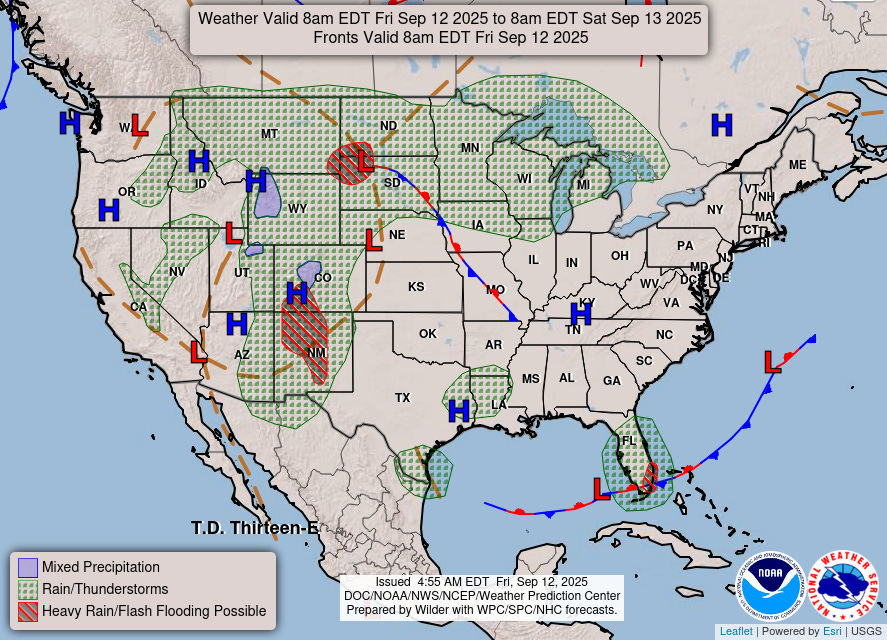
On today’s weather map, showers and thunderstorms will continue to be scattered across much of Intermountain West and upper Midwest, with slight (level 2 of 4) risks of flash flooding across parts of the southern Rockies and the Dakotas. Showers and storms will also continue over Florida, with a slight risk for flash flooding across southeast Florida.
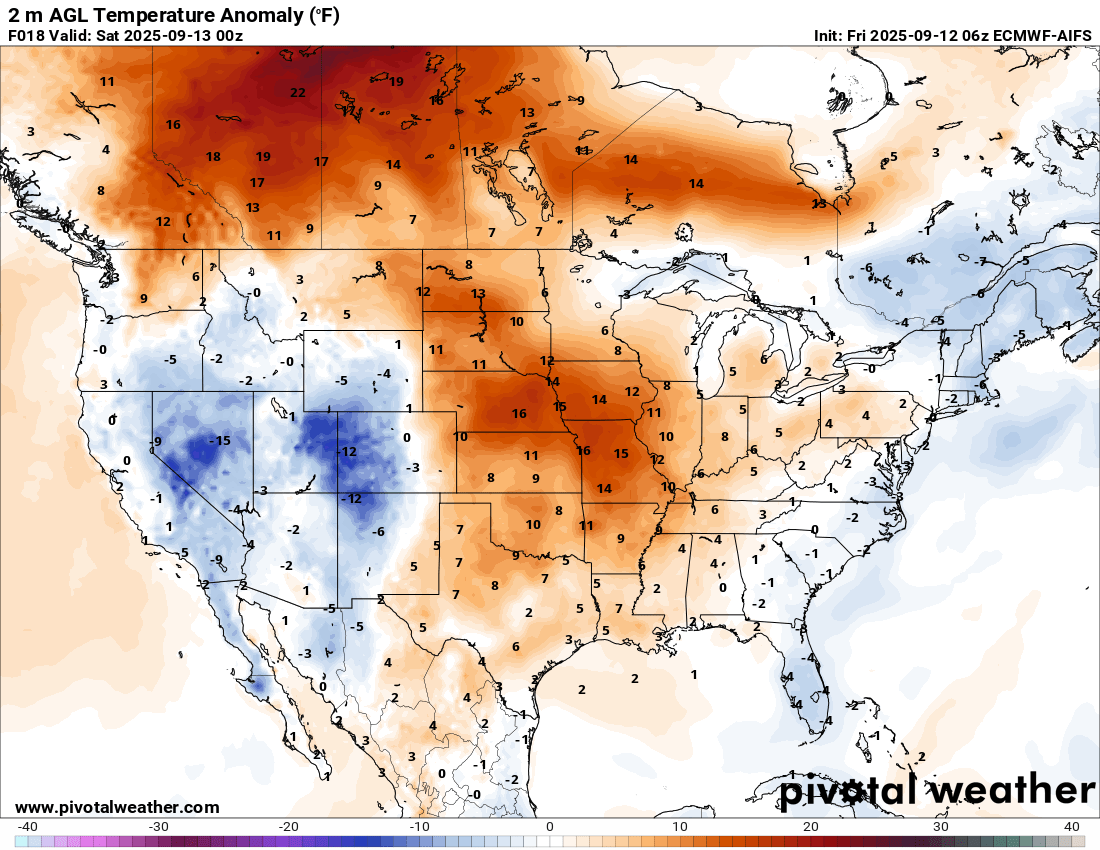
While cool conditions will persist in the western states under an upper level trough of low pressure, much warmer than normal conditions will continue across the central US and much of Canada into this weekend. A few record high temperatures were set on Thursday, and a few more will be possible this weekend.
![[Key Messages]](https://substackcdn.com/image/fetch/$s_!-DjF!,f_auto,q_auto:good,fl_progressive:steep/https%3A%2F%2Fsubstack-post-media.s3.amazonaws.com%2Fpublic%2Fimages%2F007a71bb-c2a1-4755-aceb-f71c64d94784_897x736.png "[Key Messages]")
In the tropics, Invest 95E has become Tropical Storm Mario off the coast of southwest Mexico, and tropical storm watches have been issued for part of the coast. Mario is a very small storm and because of that the forecast for it is much more uncertain than normal. For now, NHC is forecasting it to slowly move parallel to the coast and gradually intensify into a strong tropical storm before weakening over colder water.
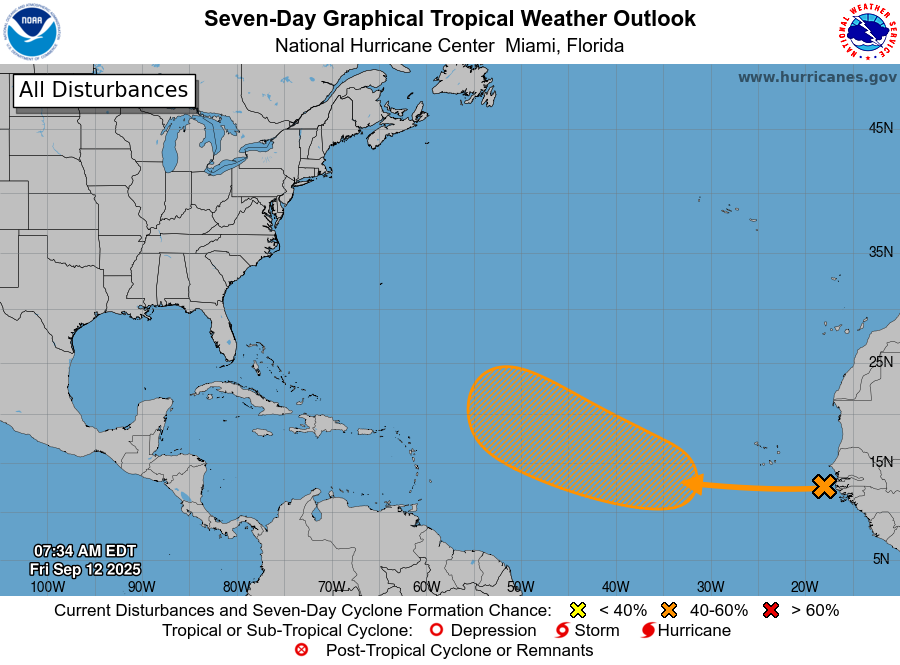
Meanwhile, in the Atlantic, the tropical wave emerging off of Africa is now up to a medium chance of developing into a tropical cyclone early next week per NHC. Obviously, that system is a long way from impacting any land, and as of now most of the longer range models suggest a system that will turn northwest well east of the Caribbean.
Programming note: I will be attending the Mississippi Book Festival in Jackson this Saturday. From 10:45 am to Noon CT, there will be a panel discussion on the 20th anniversary of Hurricane Katrina featuring former Mississippi governor Haley Barbour, who was governor during Katrina. I am planning to do a live Substack chat of this event for paid Balanced Weather subscribers, internet access permitting. I will be sharing highlights from the panelists as well as my own perspectives from being the NWS meteorologist-in-charge in Jackson at that time. I hope you can join me for this event. There will not be a regular Balanced Weather post tomorrow.
 Balanced Weather
Leave a comment