
Looking at how this evolved on the Senate floor, and what it means going forward. Weekend weather: wintry in the East, still watching the Eastern Pacific for possible tropical development
Jan 16, 2026
As I posted late yesterday afternoon, on Thursday the Senate ended debate and voted on final passage of bill H.R. 6938, the “minibus” appropriations bill which will provide FY2026 funding for a number of departments and agencies across the federal government, including science agencies such as NOAA, NASA, the National Science Foundation (NSF), the U.S. Geological Survey, and the Environmental Protection Agency. The bill was approved 85-14, and now moves to President Trump’s desk for signature to become law.
This action followed an effort by the Colorado senate delegation — Democratic Sens. Michael Bennet and John Hickenlooper — to bring to the floor their amendment to insert into the bill to protect NSF’s National Center for Atmospheric Research (NCAR) from its announced dismantling by the Trump Administration.
Sen. Bennet spoke first about NCAR (and other matters) and attempted to introduce the amendment through unanimous consent. As I understand it, unanimous consent was required because of the way in which the bill was brought to the floor by Senate Majority Leader John Thune (R-SD) — and unanimous consent requires that there be no objections to the motion or else the motion fails.
Sen. Susan Collins (R-ME) immediately objected to the Bennet motion. Collins is the chair of the Senate Appropriations Committee, and as such is responsible for shepherding the appropriations bills through debate and votes. Her rationale for the objection (while noting her appreciation for the senators’ support for NCAR) was that this bill was the result of lengthy bipartisan negotiation and there was serious risk of delay and a potential funding lapse for the agencies in this bill by including any amendment that would require the bill to return to the House. She also noted that there had “never” been any specific “carve outs” in NSF funding bills like what the amendment would require for NCAR in order to ensure impartial funding by the agency, and that “nothing in this bill precludes the continued support and operations of this center (NCAR).”
Sen. Hickenlooper then spoke in response to Sen. Collins. While one can accept (or not) her administrative concerns about the bill going back to the House, Sen. Hickenlooper early in his remarks made the main point of rebuttal to her specific comments about NSF and NCAR’s funding: it may be true that an appropriations bill has never had specific funding or direction for an NSF research center, but it is also true that a presidential administration has never directed NSF to dismantle a specific research center, and that is why the Colorado delegation felt this extraordinary step was needed. You can see the entire floor activity — the end of Sen. Bennet’s speech and his introduction of the amendment, Sen. Collins’ objection, and Sen. Hickenlooper’s speech in response to Sen. Collins — here.
In the end, obviously the NCAR amendment was not considered, and the bill was passed without it. We will see in coming weeks how the administration proceeds with regard to NCAR given the directives in the bill’s accompanying explanatory statement directing that all NSF research centers be funded and that the administration must provide Congress with a report on how it plans to maintain all of the centers. Senators Hickenlooper and Bennet issued statements late Thursday indicating that they will continue to use all available measures to ensure that NCAR is protected and funded.
One thing I want to emphasize that may not be clear from some media coverage or the speeches from the Colorado senators is that with respect to forecasting and warnings, NCAR is a research facility, not an operational facility. In other words, it is not responsible for producing daily forecasts or model guidance (although some of its experimental model forecasts and AI guidance are routinely used by meteorologists). NCAR’s main role in weather, hydrologic and space weather forecasting and warning is providing world-class facilities and the underlying administrative framework to support scientists doing absolutely crucial basic and applied research work to improve our forecast and warning capacity.
NCAR research results have underpinned many of the tremendous advances that have been made in the last five decades to improve society’s ability to deal with extreme weather, water and climate events, from improved numerical weather prediction models to major aviation safety advances from improved detection and warning for microbursts, and as Sen. Hickenlooper emphasized in his speech, improved military forecasting through development of systems such as the Global Climatology Analysis Tool (GCAT). Its work is vital to our society, particularly at a time when climate change is increasing and other nations are rapidly pushing forward with their own efforts to build research programs and leverage new technology such as artificial intelligence. NCAR should obviously be fully supported as the critical national resource it is — and I hope that our community and political leaders continue to work to protect it.
Aside from the NCAR issue, this budget bill is overall rather favorable for federal earth and atmospheric science agencies and programs, particularly in comparison to the draconian budget plans outlined in the Office of Management and Budget’s (OMB) FY26 federal budget proposals. Full details can be found in this post from last week.
One big concern for federal science agencies — and those of us interested in their work — will be how OMB will actually apportions the appropriated funding to the agencies. Last fiscal year OMB began trying to use a process known as “pocket rescissions” to provide more executive branch control over agency funding, and I would expect OMB to continue to try to utilize that approach this year. Democratic senators and some external watchdog groups accused OMB of improperly withholding FY2025 funding that had been appropriated by Congress to NOAA. These types of actions will be important to monitor now that we have a fully approved budget bill (assuming the President signs this bill).
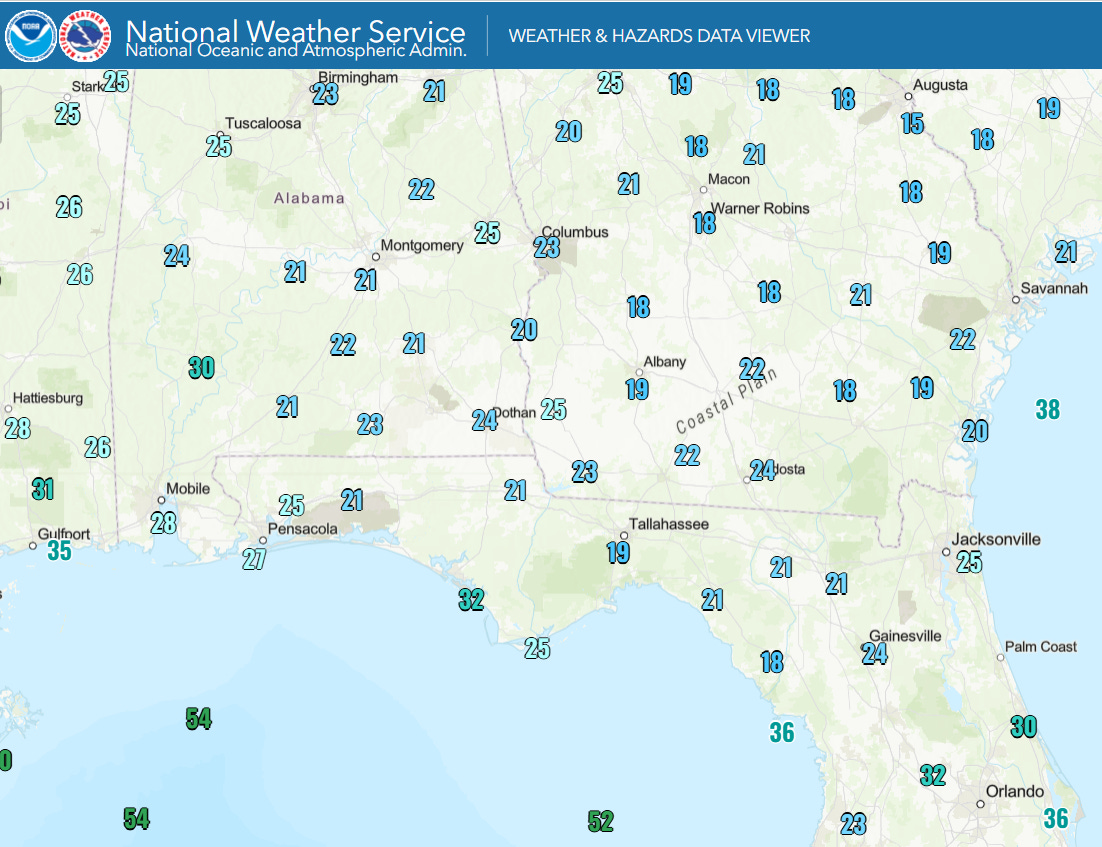
It is a cold morning across the East this Friday, with the greatest departure from normal over the Southeast as this first shot of polar air bottoms out into Florida. At least a few record low temperatures were set this morning, including 21F at Jacksonville and 33F at Melbourne.
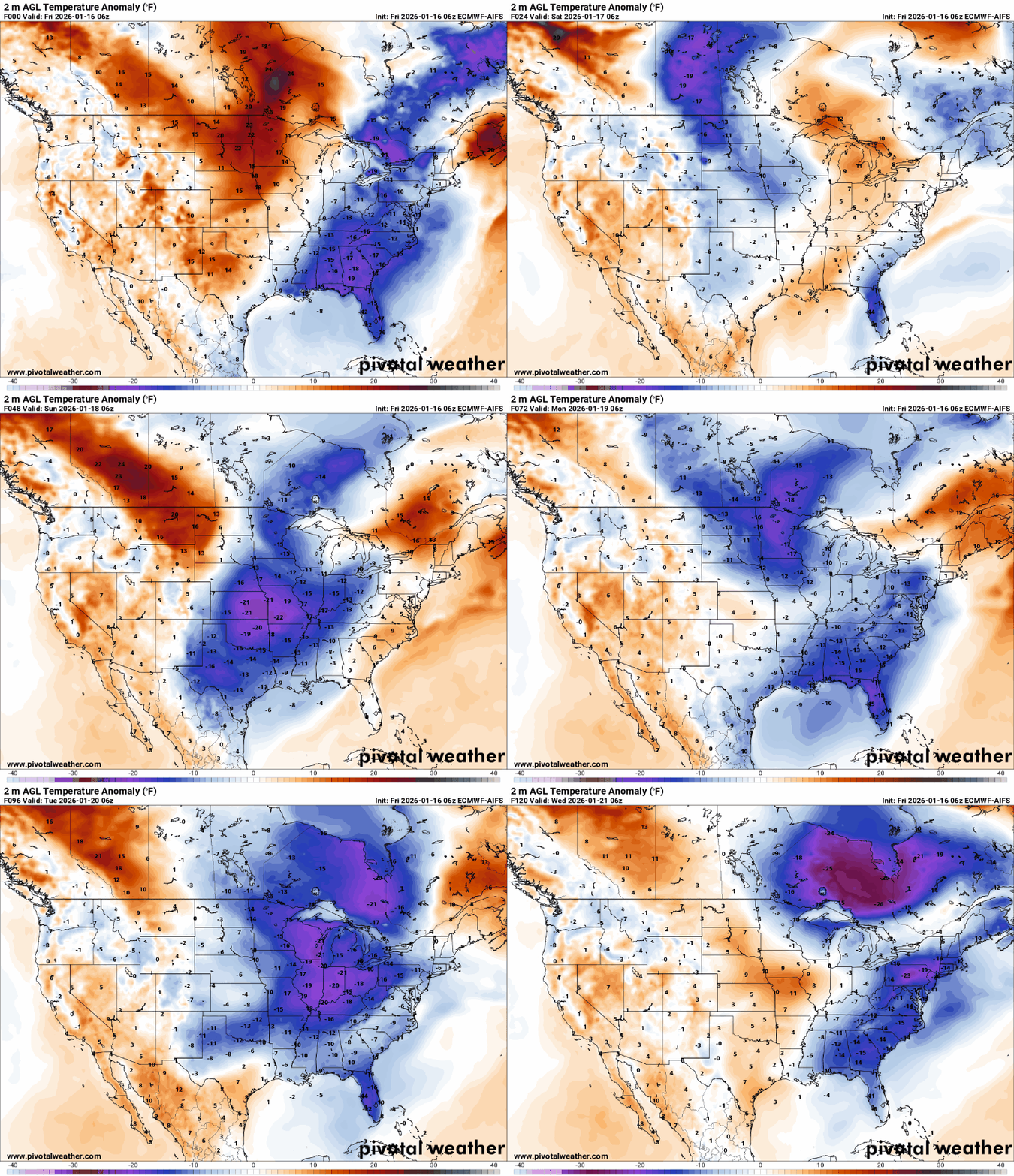
Waves of arctic air will continue to rotate south across the central and eastern United States due to the upper level of trough of low pressure downstream of the anomalous large, strong area of upper level high pressure dominating the eastern Pacific and West Coast.
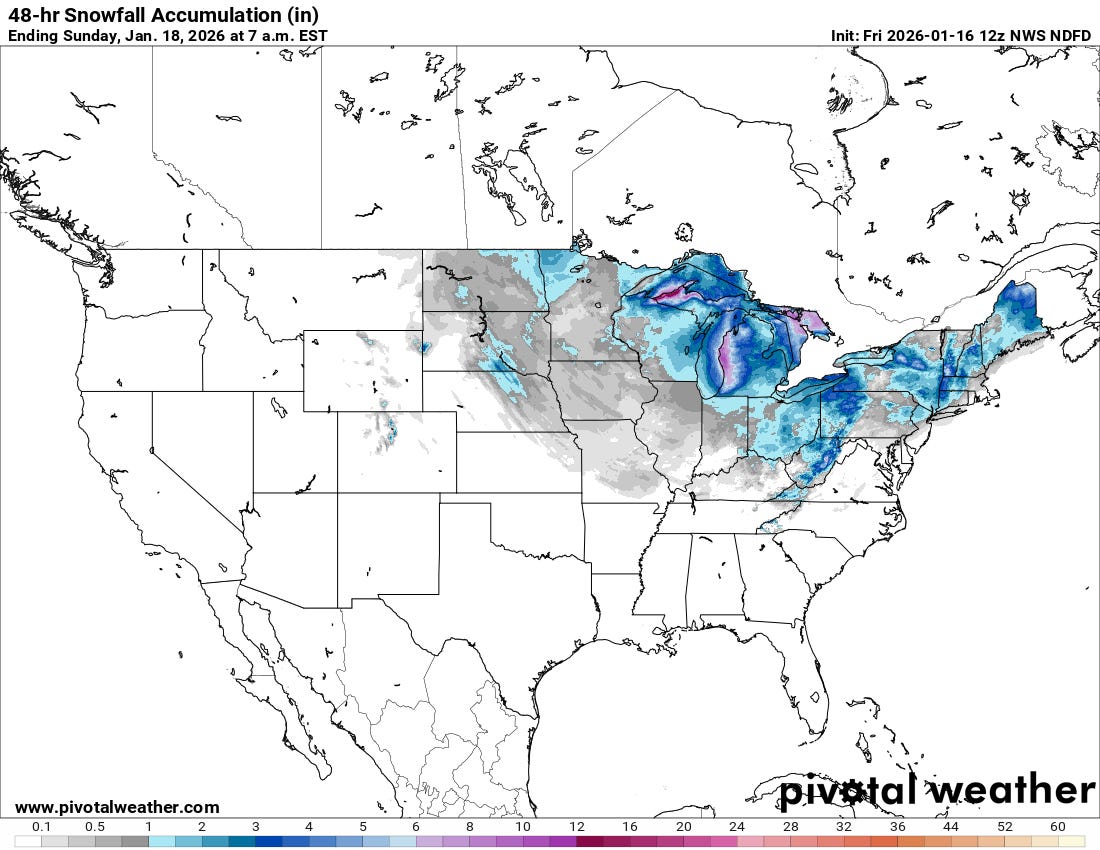
Heavy lake effect snow is expected the next 48 hours, along with light to moderate snowfall in higher elevations of the Northeast. The models continue to struggle with the track and strength of a low pressure system that should develop off the Southeast coast later this weekend. Some potential for at least light snow continues for Sunday for parts of the East Coast and we will continue to watch model and observational trends for any signs of a more significant system evolving.
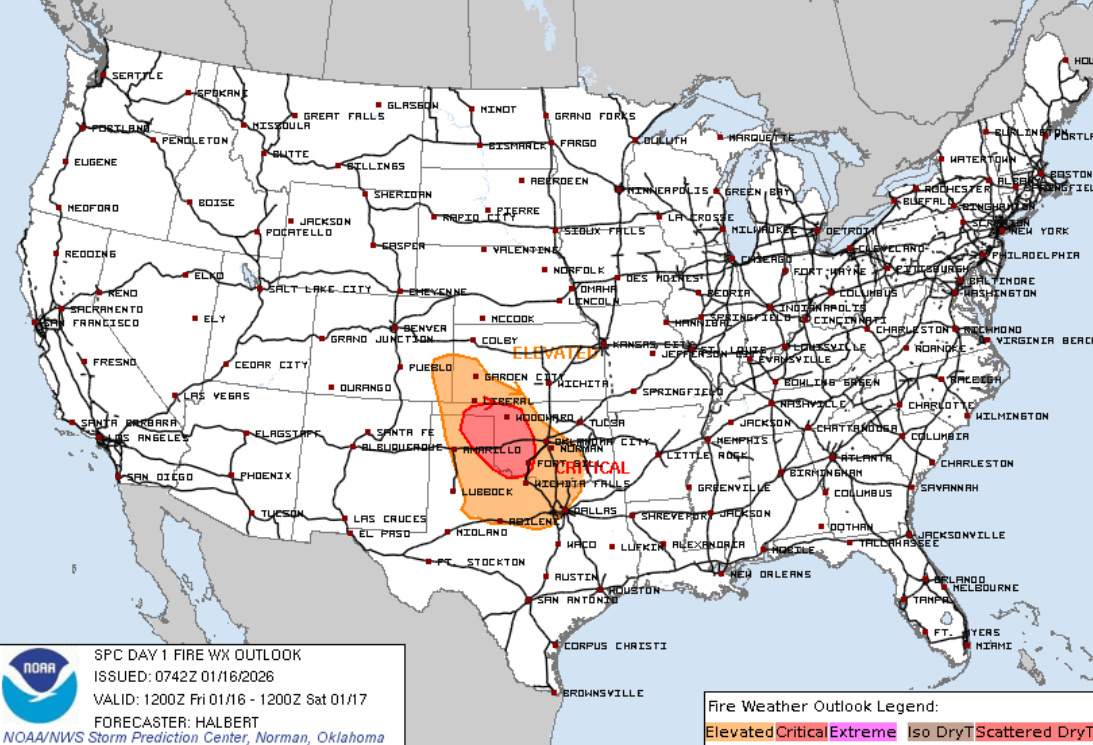
Strong northwest winds, dry air and ongoing drought will result in critical wildfire danger today across parts of the central and southern Plains.
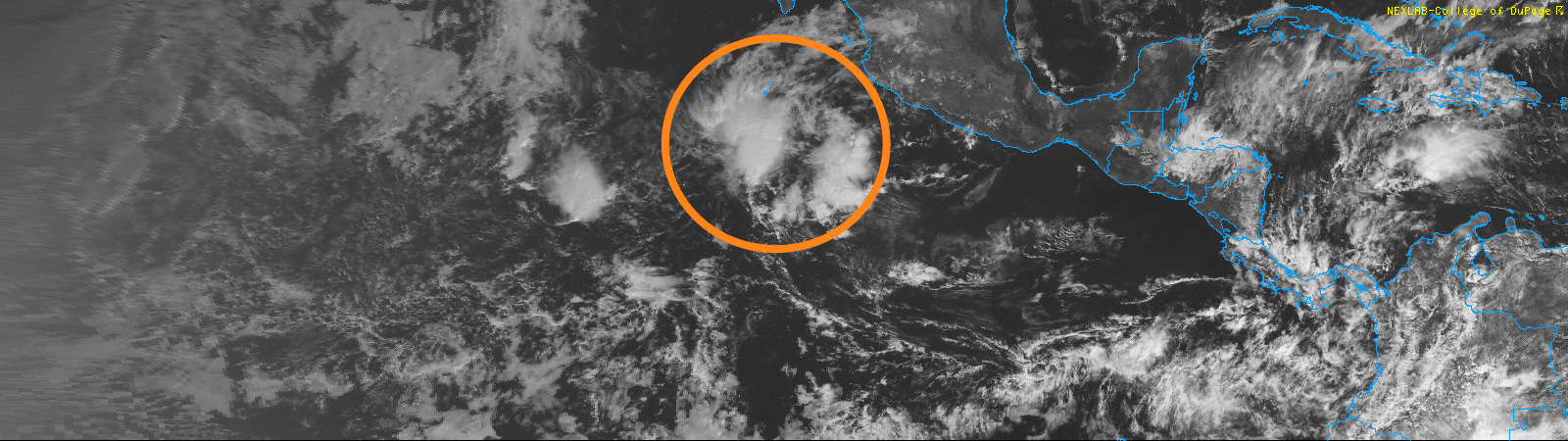
Finally, we continue to keep an eye on the tropical disturbance off the southwest coast of Mexico. The models continue to show at least some potential for a weak tropical cyclone to evolve here as the system moves slowly northwest over the next few days — which would be the first January tropical system on record in this basin if it were to happen.
 Balanced Weather
Leave a comment