
Meanwhile, some much needed snowfall coming to the West the next several days
Feb 11, 2026
A week ago I focused my daily newsletter post on a federal court ruling that the Department of Energy had violated the law in developing their Climate Working Group that developed a controversial climate report that the Environmental Protection Agency would likely use to revoke its “endangerment finding.” The EPA’s endangerment finding dates to 2009, and was a ruling that greenhouse gases (GHG) “threaten the public health and welfare of current and future generations” and are the basis for most of the federal government’s climate change related regulations.
Yesterday, White House Press Secretary Karoline Leavitt said that on Thursday President Trump and EPA Administrator Lee Zeldin will in fact announce the revocation of the endangerment finding. While this decision will undoubtedly face legal challenges — some likely to be based on the court ruling about the illegality of the Climate Working Group — it marks a major step in the Trump Administration’s effort to roll back what is sees as “crushing” climate related regulation.
This morning, Secretary of the Interior Doug Burgum discussed the administration’s planned action on Fox Business, focusing on the fact that carbon dioxide (CO2) is a naturally occurring gas within our biosphere.
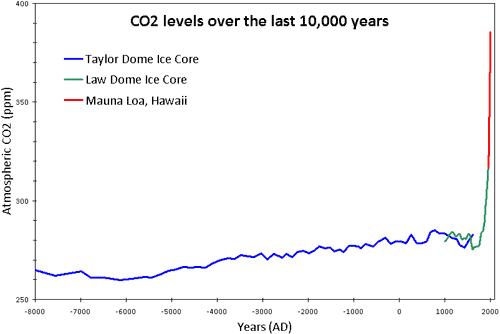
I am not a climate scientist or an economist and I try to stay in my lane with these Substack posts — so I am not going to get into the details of climate regulation here. However, as an atmospheric scientist I feel compelled to point out the specious nature of this argument. Above is a graph of the trend in CO2 over the last 10,000 years, and it does not take a scientist to see the incredible change in the last 200 or so years. This is not a natural trend in a naturally occurring gas — this is an unnatural trend due to the Industrial Revolution and the burning of hydrocarbons on a mass scale by humanity.
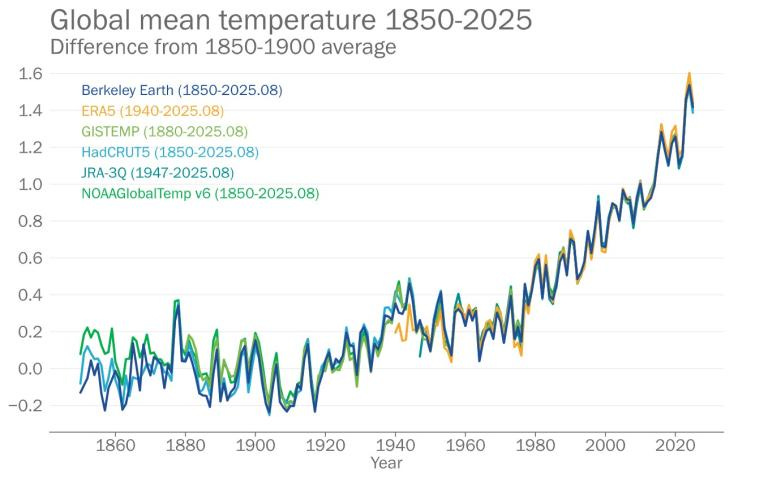
And this is the result in the atmosphere. Scientists are taught at a very early stage that correlation does not necessarily equal causation — but the scientific link between increasing CO2 and increasing global temperatures is clear and well understood.
There are many nuances of the impacts of greenhouse gases on our climate that we do not yet completely understand — but the basic role of GHGs to cause the observed warming of the climate that we have seen in the last 200 years is in fact “settled science.” The political debates about what we as a society should do in response are crucial and need to happen, and will certainly ramp up further with the administration’s planned revocation of the endangerment finding.
However, these discussions need to happen with acknowledgment of the accepted science and without gaslighting about the role of CO2 and other GHGs (methane particularly) in warming our global climate. Of course, CO2 is a “naturally occurring gas” — but the level that is in our atmosphere today is not natural, it is artificially impacting our climate, and it will cause increasing impacts on our society in the coming decades.
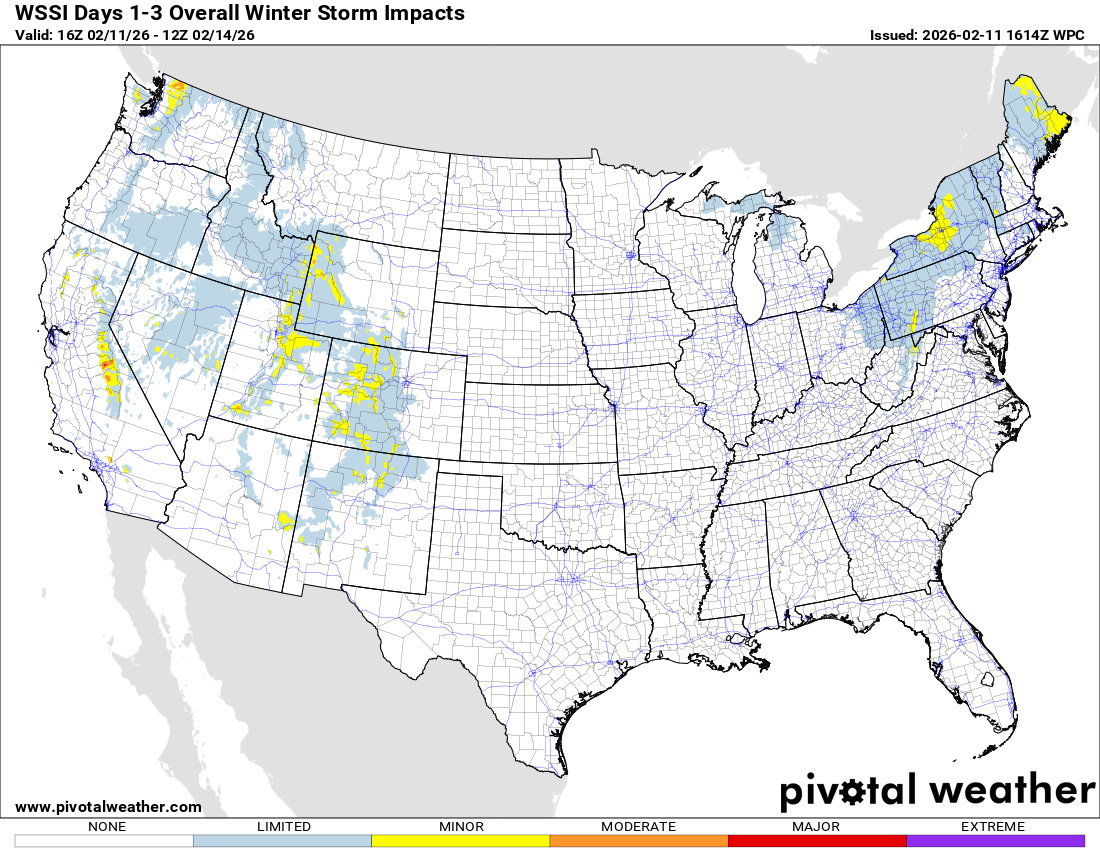
Looking at the weather for the next several days, the overall trend of the forecast that we have been discussing still looks on track. The developing upper level trough along the West Coast will bring some heavy snow to the higher elevations of the Sierra Nevada and Cascades the next few days, with snow spreading into the Intermountain West. Meanwhile, disturbances moving through the remaining upper level trough over the Northeast will bring snow showers and squalls to the eastern Great Lakes and parts of New England and Maine.
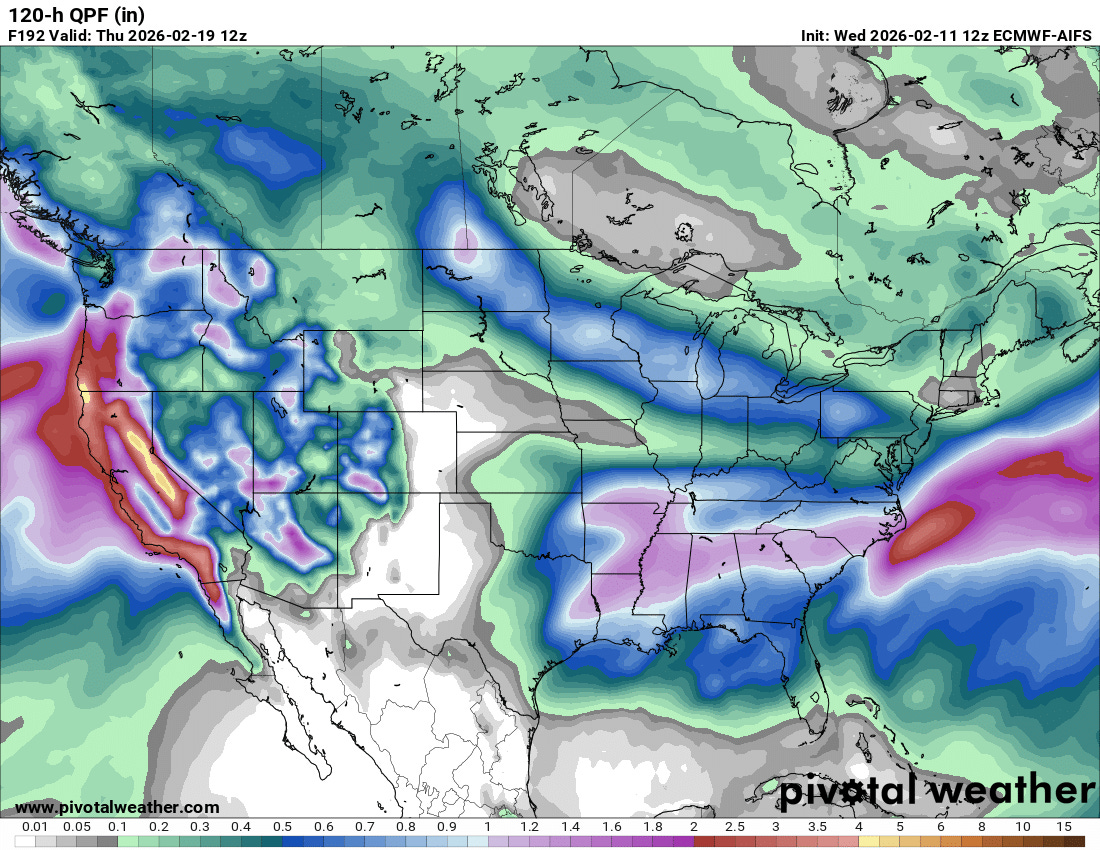
As we get into the weekend and early next week, there remains a fair amount of uncertainty about the upper level disturbance that will be moving across the Southeast as far as its intensity and track. However, it looks to bring widespread (and needed) rain and thunderstorms this weekend from the Southern Plains to the Atlantic coast. There could be some risk of severe storms for parts of this area if the associated surface low develops far enough north and strong enough to bring sufficient Gulf moisture north — this will be something I will be keeping an eye on the next couple of days. Meanwhile, heavy rainfall and mountain snows are expected in the West as a series of storm systems impact the region.
 Balanced Weather
Leave a comment