
Confirmation hearing offers some clues as about his potential leadership of FEMA. Weather news: Wednesday first of a number of historic days of March heat for West.
Mar 19, 2026
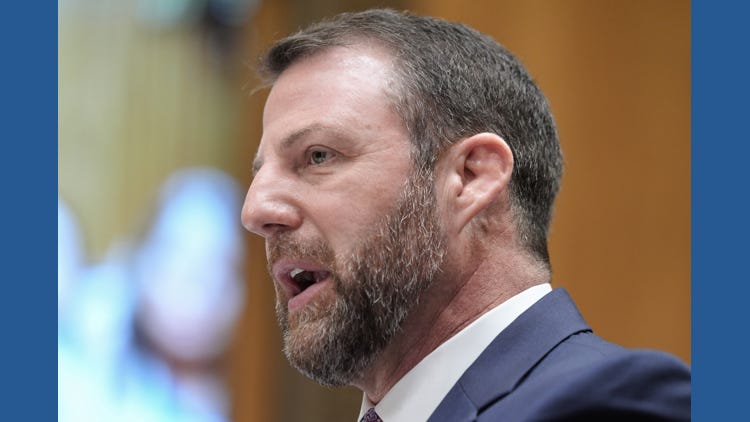
Starting off this morning with some emergency management news. The nomination of Sen. Markwayne Mullin (R-OK) was approved by the Senate Homeland Security Committee 8-7 this morning. The vote was along party lines, except that committee chair Sen. Rand Paul (R-KY) voted against the nomination, and Sen. John Fetterman (D-PA) voted for the nomination. The nomination now moves to the full Senate, where it is generally expected to be approved.
I think it is fair to say that emergency managers and those that follow disaster management policy have been observing Sen. Mullin’s nomination uncertainly — hopeful for change from the controversial term of Sec. Kristi Noem, but uncertain of Sen. Mullin’s actual plans for the Federal Emergency Management Agency (FEMA). I think this post from Dr. Samantha Montano’s excellent Disasterology pretty well summarizes the situation. Given this, Sen. Mullin’s nomination hearing on Monday was closely watched for clues about his intent for FEMA.
Sen. Mullin was asked by several of his colleagues in the hearing about FEMA. At a high level, he stated that FEMA has “got a great mission, and I think people at FEMA want to do their job.” He pledged to end Sec. Noem’s policy that all agency expenditures over $100,000 need to be approved by the secretary, and pledged to work with Congress on changes to FEMA. While the Trump Administration continues to sit on a much delayed report from a committee it formed to develop a plan to revamp FEMA, Congress has its own bi-partisan “Fixing Emergency Management for Americans Act” outlining its vision for improving FEMA.
The Associated Press published a story this morning in which the emergency management officials they talked to sounded a note of cautious optimism about Mullin’s comments about FEMA during his hearing.
Former FEMA officials expressed hope that Mullin’s comments could mark a change from the tumult under Noem and signal an opening to serious efforts to streamline the agency. “He gets the importance of FEMA and while there is definitely room for improvement, he understands the partnership with FEMA is essential,” said Deanne Criswell, FEMA administrator under Democratic President Joe Biden. Pete Gaynor, FEMA administrator during Trump’s first term, said Mullin’s remarks were “an impressive and meaningful first step forward.”
Obviously, the true test will be in the policies and actions Mullin implements if and when he becomes Secretary of Homeland Security.
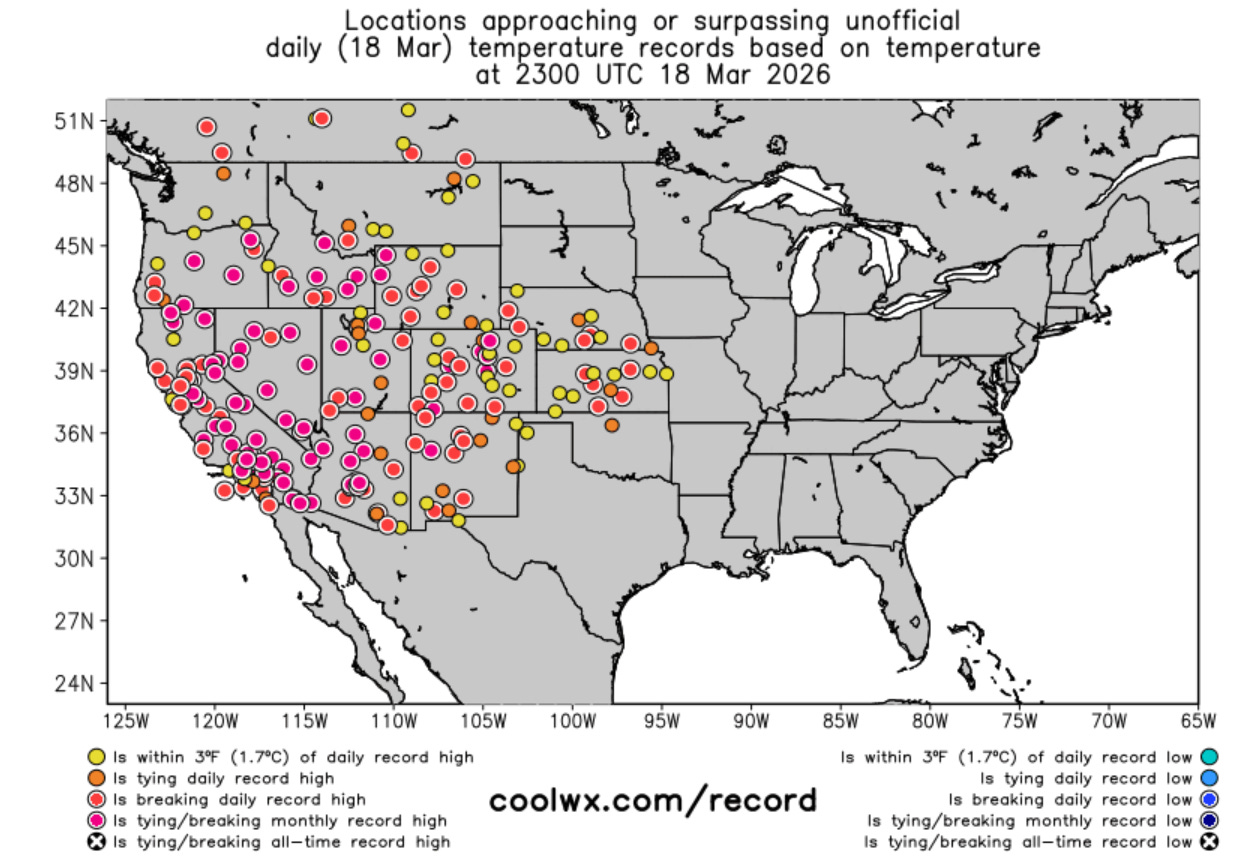
The big weather story continues to be the incredible March heat wave that kicked into another gear again on Wednesday. Dozens of sites tied or set new record maximum temperatures for the month of March — which again in and of itself would be impressive considering we are only in the middle of a transition month climatologically in which most monthly records are set near the end of the month. Some of the most notable monthly records included:
- Phoenix 102F (previous record 100F, records back to 1895)
- Yuma 103F (previous record 102F, records back to 1878)
- Las Vegas 94F (previous record 93F, records back to 1937)
- Needles, CA 101F (previous record 99F, also earliest 100F by 2 weeks, records back to 1888)
- Palm Springs 106F (previous record 104F, records back to 1922)
- Reno 86F (previous record 83F, records back to 1893)
- South Lake Tahoe, CA 76F (previous record 71F, records back to 1968)
- Flagstaff 76F (previous record 73F, records back to 1898)
The climatological BlueSky account Extreme Temperatures around the World noted that California (108F), Arizona (105F) and Wyoming (86F) all likely set state record max temperatures for March yesterday, and that Mexicali set a national March record for Mexico with 40.9C (106F).
I am not sure I can convey to non-meteorologists just how impressive it is to see this many sites over such a large region setting monthly records (particularly at an unusual time of a transitional month) — and to see them being eclipsed at many sites by more than 1F. Wednesday would be an incredible, historic climatic day if it were just a single day, but of course it is near the beginning of a multi-day event which will see many of the records set yesterday significantly eclipsed, multiple times.
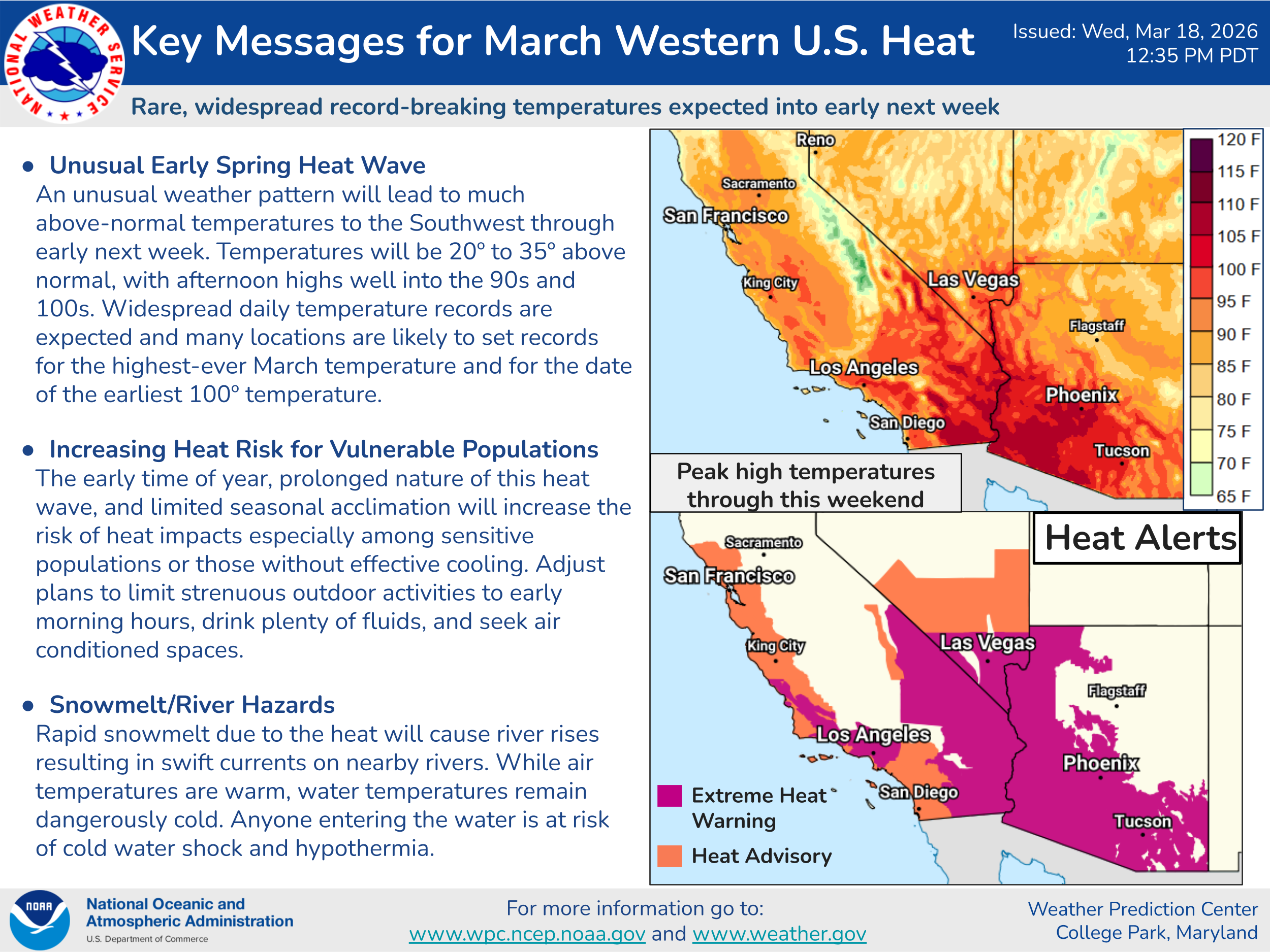
While the intensity of the heat will vary over the next several days, overall well above normal (20 to 35F) temperatures with frequent daily and monthly records will continue for much of the West through early next week. It is likely that the national records for March and earliest 110F reading will be eclipsed (the 108F in California Wednesday likely tied the national March record).
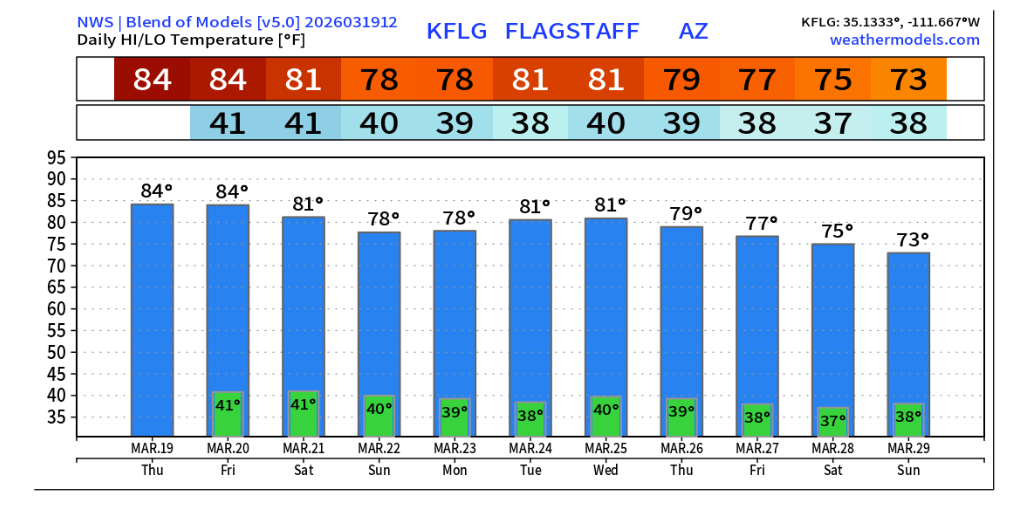
For today’s illustrative example, I want to highlight Flagstaff, AZ. If it reaches 84F as forecast today and Friday, that temperature would exceed the all-time March record prior to this heat wave (73F) by 11 degrees – completely unheard of and bonkers, particularly to do it two days in a row. Perhaps even more incredible: the forecast maximum temperature for each of the next 10 days — even that “cool” looking 73F next Sunday — would have been a monthly record prior to this year. Adding in the monthly records of the last two days, that could make nearly 2 straight weeks (13 days) with high temperatures at or above the previous monthly record high.
While it’s probably relatively clear, I do think it is important to state that this level of abnormal warmth would “be nearly impossible without human-caused warming” as noted by the climate communication group Climate Central. Their BlueSky thread has a good summary of the science behind that conclusion.
 Balanced Weather
Leave a comment