
Another week, more record heat
Mar 23, 2026
Over the weekend, there was a lot of talk on social media about the results from the 2025 version of the annual survey of federal employees done by the Partnership for Public Service about their workplace and the quality of services they feel their agency is providing to the public. For the last couple of decades — including during the first Trump Administration — this survey was done in partnership with Office of Management and Budget as part of the Federal Employee Viewpoint Survey (FEVS).
As a federal employee, I participated in this annual survey, and as a federal supervisor and leader, I utilized the results of this survey with other members of our facility and agency leadership team to try to improve our workplace and services. Last year, the Trump Administration decided to discontinue FEVS — so the Partnership for Public Service was left to conduct the survey on their own, which they did.
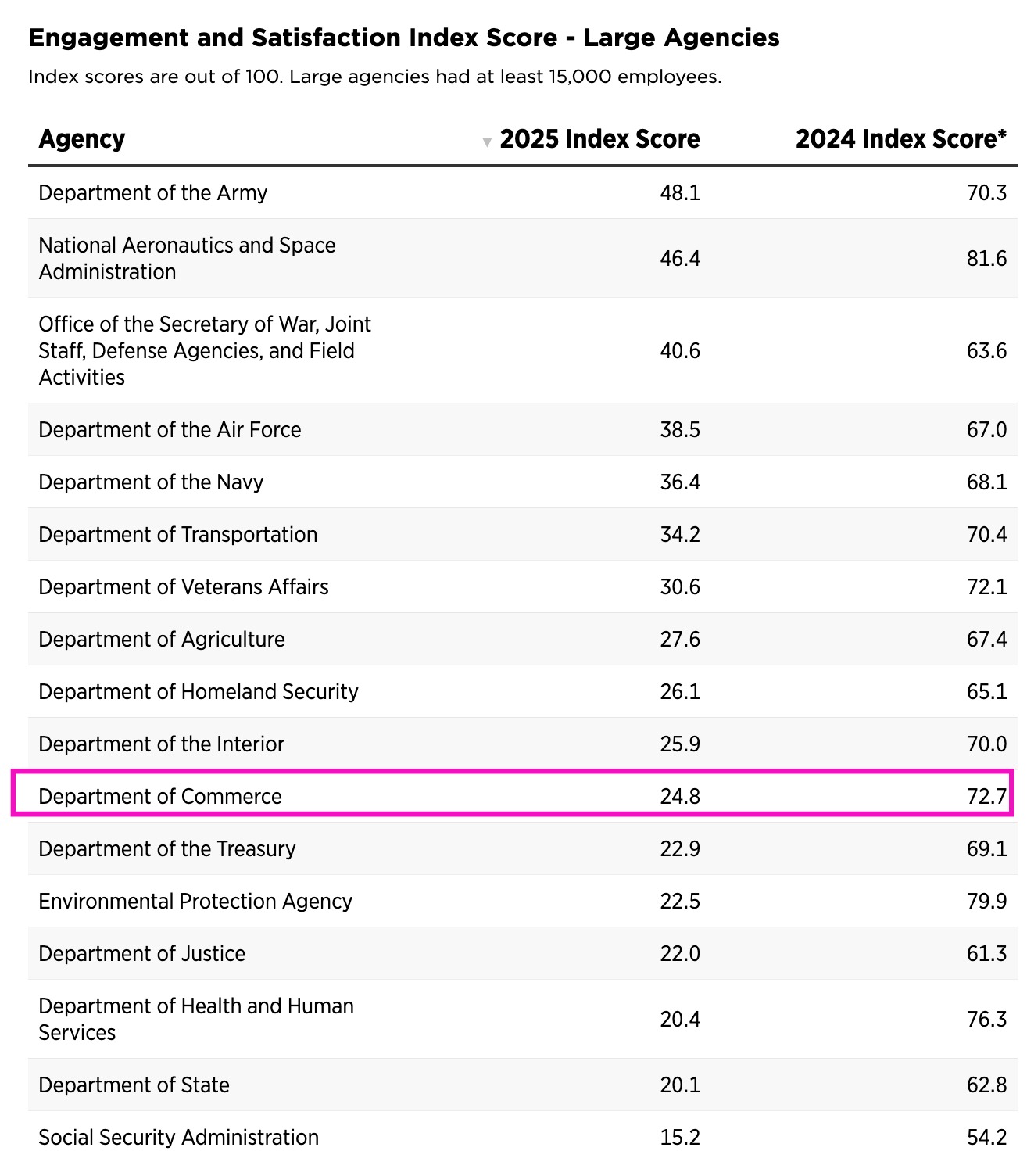
I am not going to get into the full details of the survey and its results, but strongly encourage you to read this Substack article from Don Moynihan in which he dives into the findings and implications. The table above gives the high level summary of the results, comparing the average employee “engagement and satisfaction score” (i.e., how employees feel about their job and their efficacy in the role) for major federal agencies.
Obviously, the scores are much lower in 2025. I am going to take this a step further as someone who actually had to utilize the results of this survey every year and say that I find these results appalling and, frankly, scary (more on that below). I would not have envisioned it was possible for these scores to dip so low — and to be clear, this survey was conducted after most of the departures due to DOGE cuts, so these are the results from the employees that chose to stay.
The results above are essentially from the cabinet level department perspective. NOAA — the agency I obviously focus most on — is a part of the Department of Commerce. Commerce has historically been one of the better scoring entities within the federal government, and indeed you can see its 2024 score was 72.7, in the upper half of scores. NOAA typically has been one of the best entities within Commerce, and its score in 2024 was 77.6.
I would say that the drop in the employee index score of Commerce from 72.7 to 24.8 is unbelievable to me — but really, what I mean is that prior to March 2025 it would have been unbelievable to me. Given the stories I hear on an almost daily basis from colleagues still in NOAA about the state of affairs and the trials of being a federal employee, and how the morale of the employees has cratered in the last 12 months, ultimately I am not that surprised.
As a reminder, the current leader of the Office of Management and Budget, Russell Vought, was famously quoted as saying, “We want the bureaucrats to be traumatically affected. When they wake up in the morning, we want them to not want to go to work, because they are increasingly viewed as the villains. We want their funding to be shut down … We want to put them in trauma.” Clearly, the results of this year’s federal employee survey show that he is succeeding beyond his wildest dreams.
The problem, of course, is that we in the public rely on these “bureaucrats” for many vital services, from law enforcement to air traffic control to weather forecasts and warnings. The job of being an operational meteorologist in NOAA/NWS is by its nature a difficult job — it requires middle of the night shiftwork, being away from families for holidays, and of course making critical life and death severe weather warning decisions under incredible stress.
There have already this spring been a couple of severe weather events in which the quality of NWS services have been questionable, even to the point of attracting Congressional queries. Questions naturally immediately gravitate to if the NWS had adequate staffing and resources — but a less asked question but one that I think is particularly crucial right now is the potential impact of poor employee morale. This is obviously a lot harder to quantify — which is probably why it is less focused on. But when you are already in a high stress position with a lot of potential for public scrutiny if a failure occurs, what is the potential impact on employee performance of poor morale particularly due to feelings of lack of support from or trust in senior leaders?
NWS employees have been further dealing with chronic, multi-year staff shortages and budget constraints, and now are faced with an imminent major reorganization. Public details of this restructuring are limited as of now, but this is almost certainly adding stress to NWS employees and further eroding morale. The bottom line is whether we are talking about NOAA meteorologists, air traffic controllers, law enforcement, or other critical positions, federal employees are not just “bureaucrats.” We rely upon them to be able to perform their jobs effectively. In my opinion, seeing their morale at such an incredibly low ebb is actually scary — especially given that there does not appear to be any particular recognition by government leaders or the public of the deeply concerning situation we are in. Hopefully, the results of this survey will start to bring a bit of awareness and action.
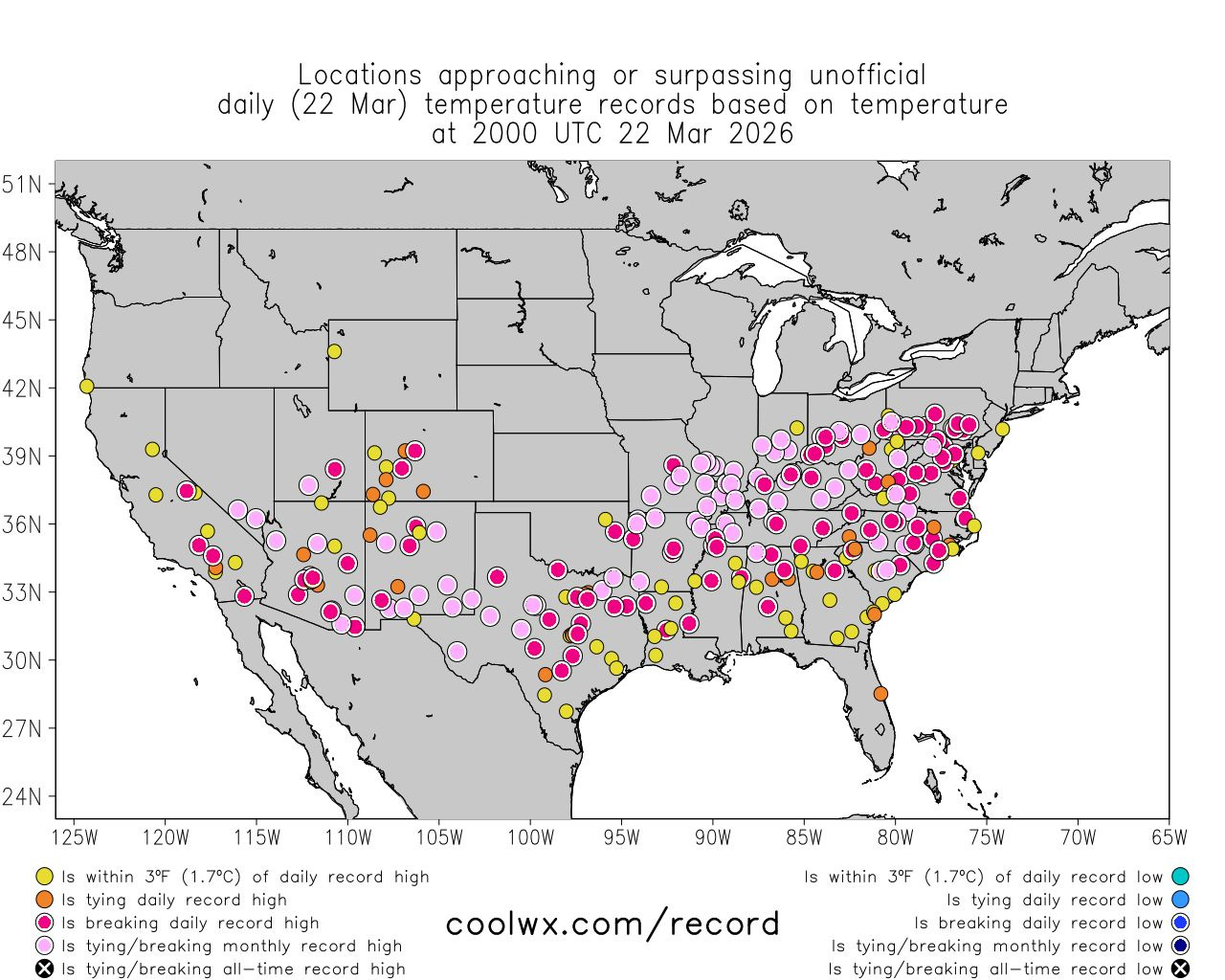
Turning to weather, a cold front brought some “relief” from the record heat across parts of the northern Rockies and Midwest, but southwest winds ahead of the front transported the record warmth all the way to the East Coast ahead of the front. Dozens of daily and some monthly records were set.
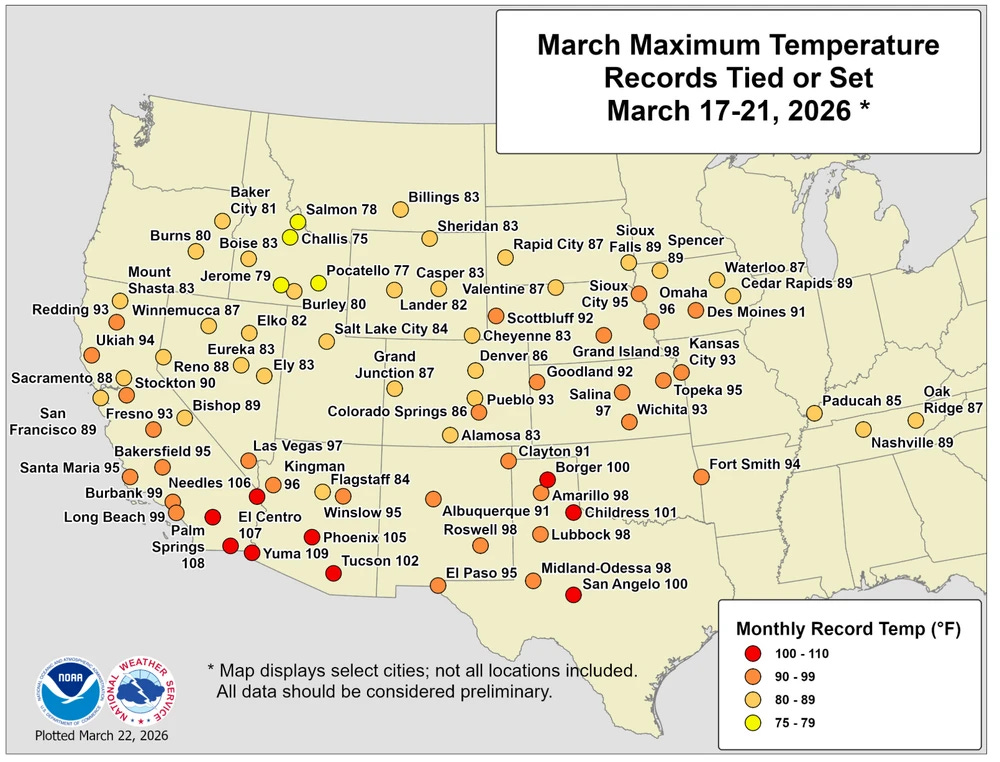
This map from the NWS shows a selection of the climate sites around the country that have set monthly records for March so far during this heatwave. As a reminder, many locations in the West have reached high temperatures above their original monthly heat record on several days, and in some cases have actually set new records on multiple days. As an example, my colleague Matt Lanza pointed out that El Paso set new monthly record high temperatures on Friday (94F), Saturday (95F), and Sunday (96F).
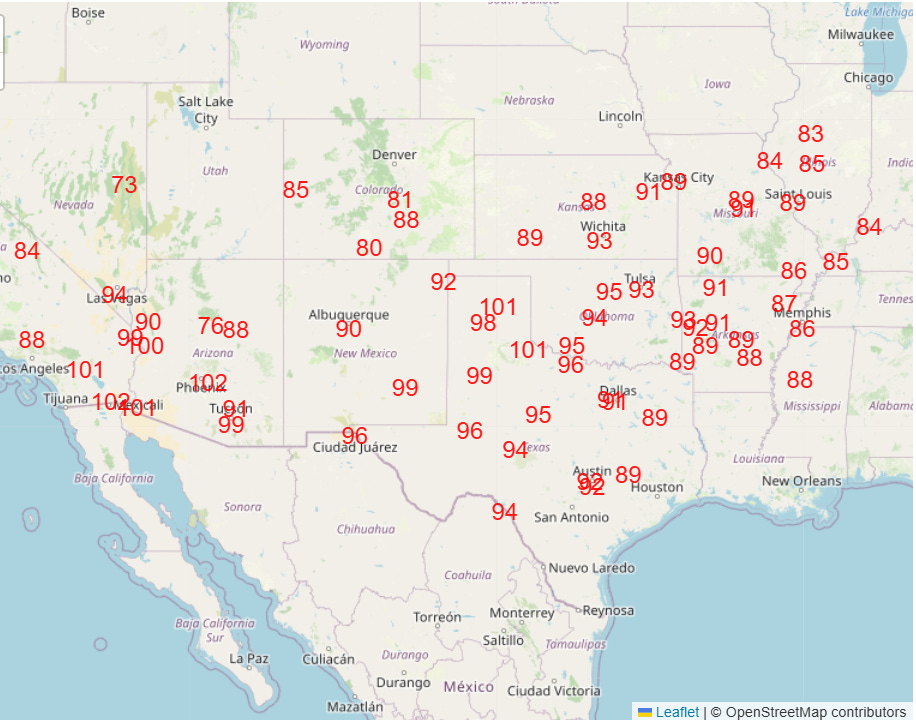
While the cold front has temporarily tamed the record heat in the eastern half of the country, it will continue and will actually rebuild again across the West. By the middle of the week, it will once again expand east and by Thursday (map above) dozens of records including some monthly records will likely again be reached across much of the southern half of the country.
For more information about this historic event, Bob Henson and Dr. Jeff Masters have a great article summarizing the heatwave and some of the implications on drought and water supply. Dr. Daniel Swain and Anthony Edwards are frequently sharing updates with a particular focus on impacts for the western United States.
 Balanced Weather
Leave a comment