
And warm weather West…wet weather East
As we continue with relatively quiet weather today, I am going to start this morning’s newsletter with some news on the government and research side. Late yesterday, the Department of Commerce issued a press release announcing the termination of the cooperative agreements between NOAA and Princeton University, including the cooperative agreement funding the Cooperative Institute for Modeling the Earth System (CIMES). According to the release, the termination took place “after a detailed, careful, and thorough review of the Department’s financial assistance programs against National Oceanic and Atmospheric Administration’s (“NOAA”) current program objectives.”
The release makes it clear that the Department is terminating the agreement due to the institute’s focus on climate research and climate change topics. For example, from the release…
This cooperative agreement promotes exaggerated and implausible climate threats, contributing to a phenomenon known as “climate anxiety,” which has increased significantly among America’s youth. Its focus on alarming climate scenarios fosters fear rather than rational, balanced discussion. Additionally, the use of federal funds to support these narratives, including educational initiatives aimed at K-12 students, is misaligned with the administration’s priorities. NOAA will no longer fund these initiatives.
I think some background information about the organization of NOAA Research and how cooperative institutes fit into that organization is helpful here. The bulk of NOAA’s research efforts are focused at 11 labs scattered around the country. Each of these labs is made up of a cadre of federal scientists and support staff, but a large part of the research work of each lab is done by employees of NOAA affiliated university cooperative institutes (CI) associated with that lab. For example, at the National Severe Storms Lab where I worked, our partner institute was the University of Oklahoma’s Cooperative Institute for Severe and High-impact Weather Research and Operations (CIWRO).
The cooperative institute structure has been in place for decades, and gives both NOAA and the university significant benefits. For NOAA, the CIs provide an entity with the flexibility and academic environment of a university research institute but aligned with and working toward NOAA goals. For the university, the CI agreement provides (relatively) stable research funding that can be utilized to build longer term research lines and academic programs that can help educate new scientists not only for NOAA but the science community in general. An external review of each CI is conducted every 5 years.
CIMES at Princeton University is the NOAA CI for the NOAA Geophysical Fluid and Dynamics Laboratory (GFDL). GFDL has been in operation since 1955, and focuses on developing models of the earth systems. While it certainly plays a big role in climate research, GFDL also conducts critical research in a number of other important NOAA weather and ocean areas. For example, GFDL developed the FV3 dynamic model core that serves as the foundation for the NOAA atmospheric modeling suite, including the NWS Global Forecast System (GFS).
Although the DOC press release and this article from the Daily Princetonian imply that the entire NOAA cooperative agreement supporting CIMES has been canceled, it’s not 100% clear to me that is in fact what has been done given the complexity of NOAA research grants and agreements. However, if in fact this is the case, this is clearly a major blow to NOAA Research and the broader weather community. As I alluded to above, GFDL has played a key role in numerical weather prediction research in the United States, and is currently working on the Global-Nest Initiative within the weather community’s Unified Forecast System (UFS). While each NOAA research lab has unique resources and challenges, given the critical role CIs play for all of them, if CIMES has been eliminated, it is hard to imagine how this would not be a huge, long term negative impact on GFDL’s work.
Furthermore, the impacts are not limited to GFDL. The DOC press release finishes with this:
The Department will, of course, continue to review its outstanding cooperative agreements, grant awards, and other financial assistance on an individualized basis to avoid wasteful governmental spending—whether they be to Princeton or any other recipient. (emphasis added)
In doing so, the Department will be doing its part to continue to “right size” the Federal Government. Reducing and streamlining the Department of Commerce’s external financial assistance programs is a key part of its efforts to be a responsible steward of federal funding from hard-working American taxpayers.
This makes it clear that all of NOAA’s research and CIs are being examined for these kind of cuts. While the potential tangible impacts are obviously unknown, this will certainly raise concern and stress across the NOAA Research staff – both federal and CI – in the same way that NOAA’s operational meteorologists have also been dealing with as I discussed last week.
Obviously, all of this has serious implications for the future of NOAA and the services it provides. I will continue to provide updates and perspective as I hear more.
Wet East…Warm West
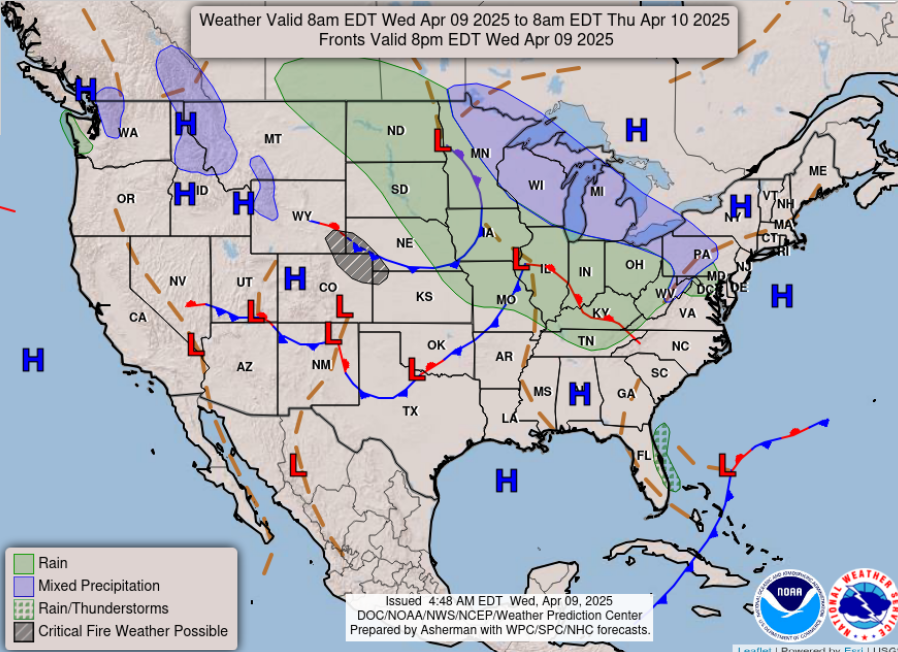
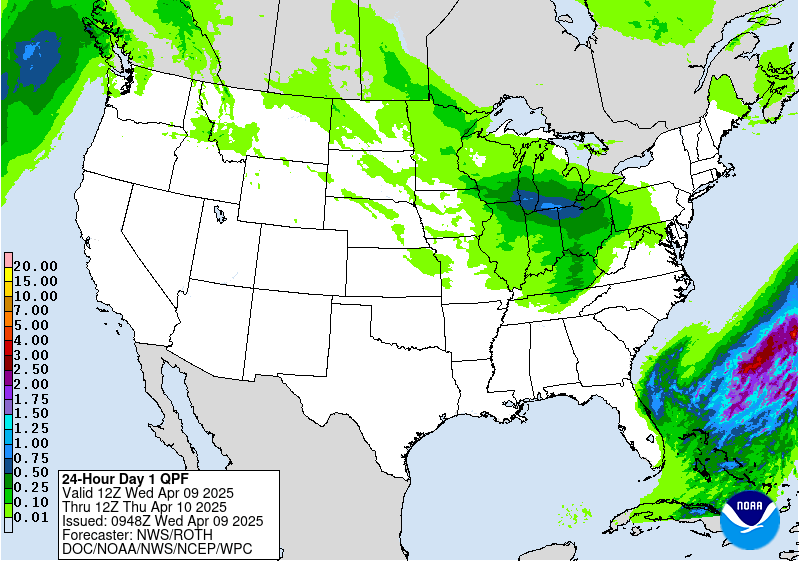
Turning back to the weather, things remain relatively quiet across the country, at least compared to last week. A storm system is moving through the central part of the country bringing some rain and wintry precipitation as shown on the Weather Prediction Center forecast map for today, but nothing too major as precipitation amounts will be fairly light with the exception of some .50” amounts in the lower Great Lakes.
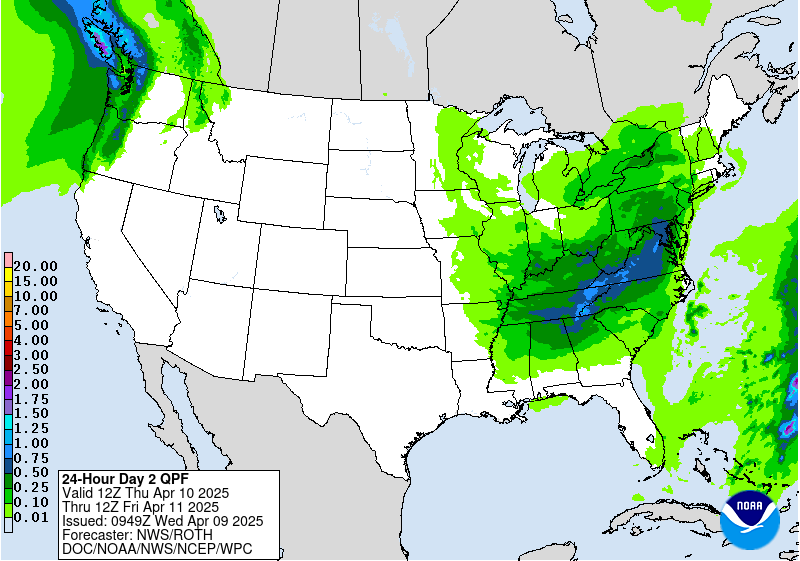
That storm system will bring a little more widespread and heavier precipitation to much of the eastern United States on Thursday.
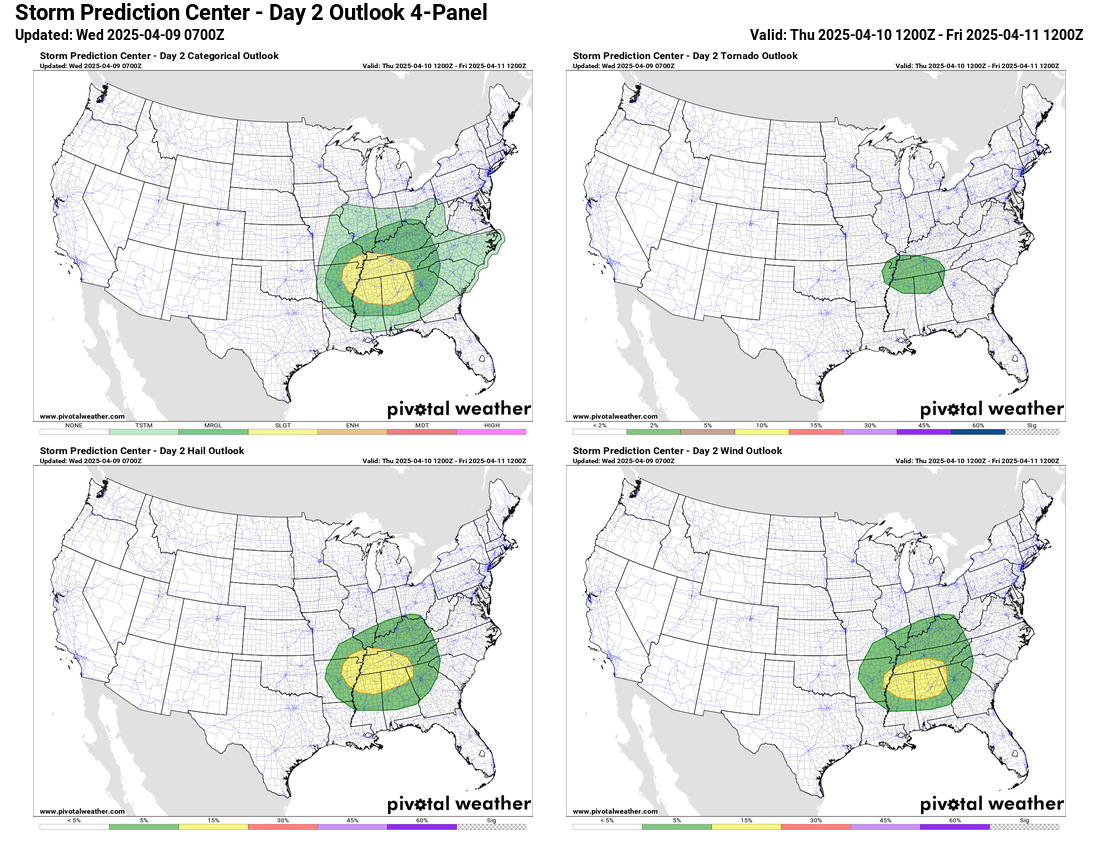
While not a major severe weather threat by any means, by tomorrow enough instability will exist with this system to bring some thunderstorms along with the widespread rain. Sufficient instability and wind shear will exist for a risk of a few severe storms in the Mid-South and Tennessee Valley region, with hail and damaging winds the primary risk. SPC has a slight (level 2 of 5) risk for this area. This storm system will move off the East Coast later on Friday after bringing one more day of showers and some thunderstorms to the eastern seaboard region.
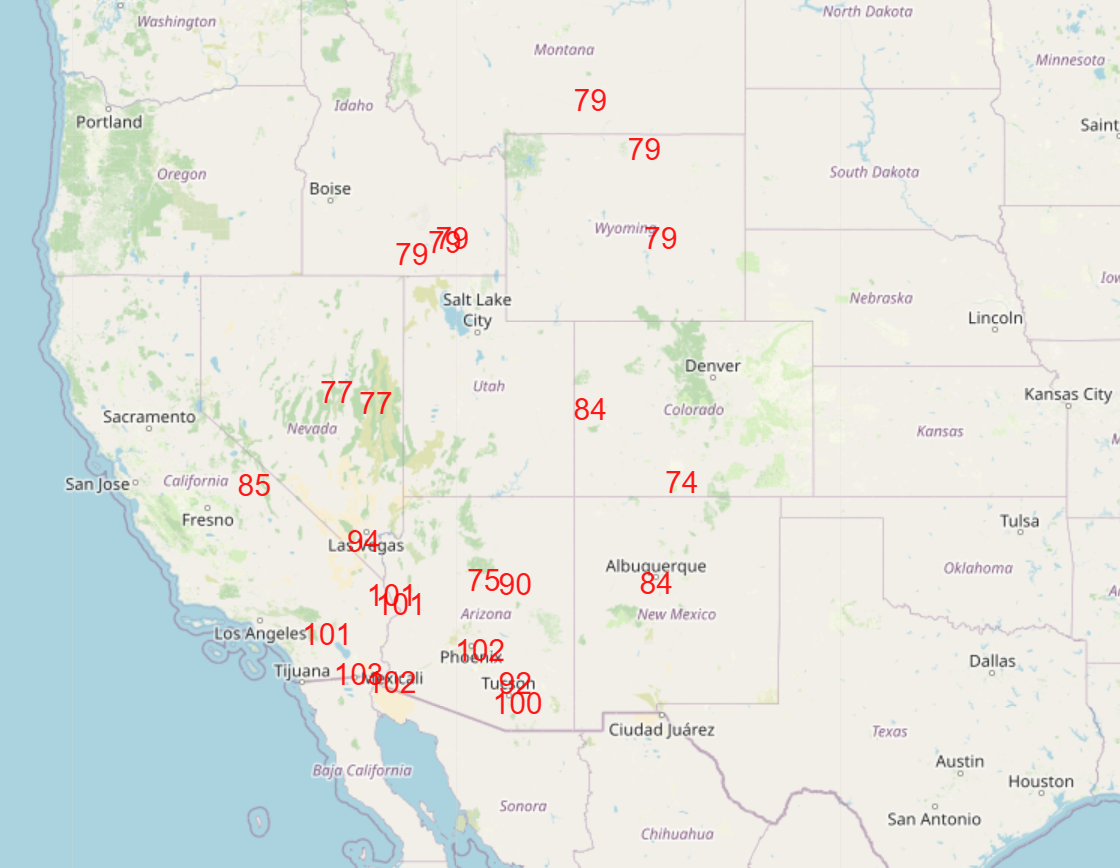
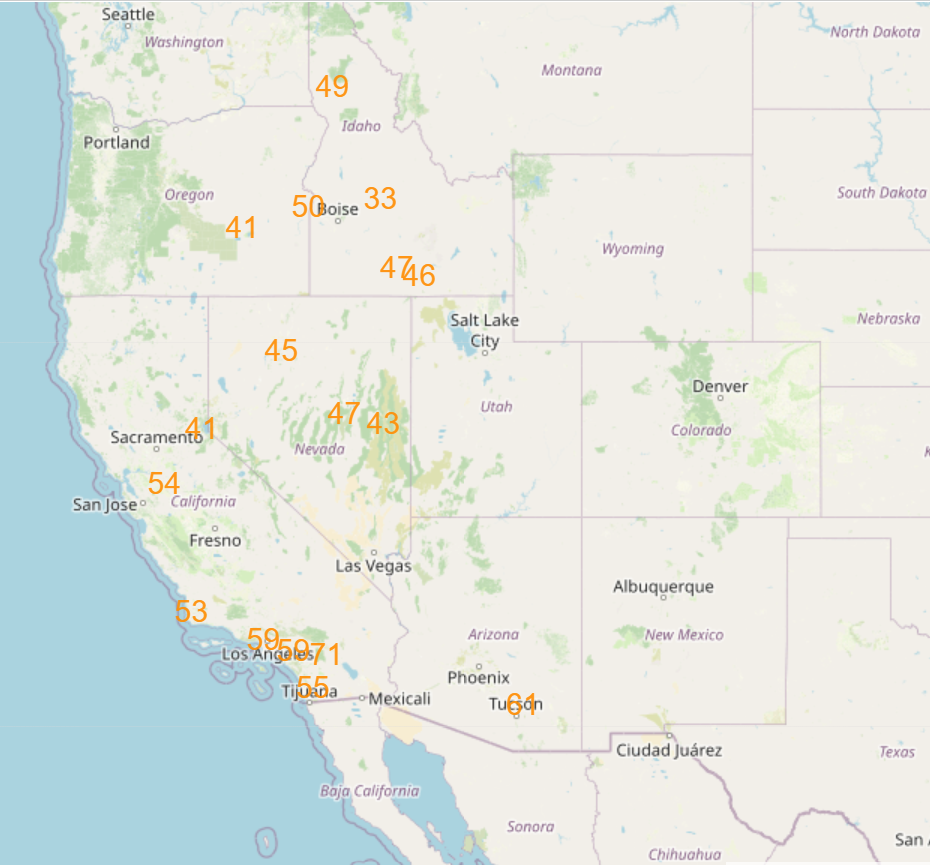
The big weather story for the rest of this week is likely to be the record heat expected in the western United States. A number of locations are expected to set records both for record high maximums and minimums the next few days. The maps above show the forecast locations for Friday.

The most recent week 2 outlook for the NWS Climate Prediction Center shows the same general weather pattern continuing next week: warm out west, while a bit of a trend toward cooler and somewhat wetter weather in the east.
 Balanced Weather
Leave a comment