
Quieter weather on tap for a few days for most of the country
Apr 18, 2026
Yesterday Dr. Daphne LaDue, the longtime head of longtime Research Experience for Undergraduates (REU) atmospheric and geographic sciences program at the University of Oklahoma, announced on social media that for this first time since 2006 that this special summer program will not be happening this year. REU is an NSF sponsored program that provides funding for universities to host programs that enable undergraduate students to work with faculty and other researchers on a summer research project in their field. NSF has for decades supported many REU programs around the country in all of the science and technology fields that the agency supports.
There are several REU programs in atmospheric science programs around the country, but the OU REU program is special for a number of reasons, most importantly that it is based at the National Weather Center (NWC) in Norman. The NWC is an incredibly unique facility in that is houses a noted atmospheric sciences university program (OU) and its associated research institutions such as CIWRO and the Advanced Radar Research Center; a premier NOAA research lab (National Severe Storms Lab); the NWS national centers for severe weather and fire weather forecasting (Storm Prediction Center), hazardous weather warning training (Warning Decision Training Division) and radar meteorology (Radar Operations Center); as well as regional and state entities such as the Oklahoma Mesonet and USGS South Central Climate Adaptation Science Center and the local NWS forecast office. All of these research and operational entities being collocated provides an incredibly rich and dynamic scientific environment for undergraduate students to be immersed into, and the opportunity to be exposed to many diverse potential job and research paths as they move forward with their academic and professional careers.
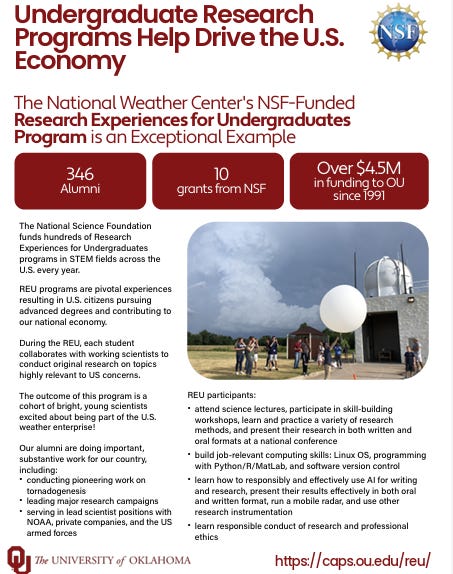
I was lucky enough to serve as an REU mentor for students working on research projects related to my work at NSSL, and saw firsthand how this incredible program helps students develop into outstanding professional scientists. I literally know dozens of leading atmospheric scientists who went through the REU program at OU, and many of them have spoken about how their time in the summer REU program was a seminal experience in their career journey.
The 2026 OU REU was cancelled because the NSF grant funding the program was due for renewal this year, and as of yesterday Dr. LaDue and her team had still not received any word on if the grant would be renewed. At this point, it is too late in the year for the logistical arrangements to be made to host the program even if the grant ends up being funded. My sense is that the OU REU program is another casualty of the seemingly intentionally slow grant awarding in federal science agencies that I have talked about in earlier posts.
These federal policy decisions have a real life impacts to a multitude of people. This article from Inside Higher Ed talks about the numerous REU programs across STEM fields having to be shuttered this year across the country this summer — and the impacts to the students and our nation’s scientific capacity. It personally makes me very sad and angry that multiple cohorts of young scientists will not get to have this potentially life changing experience this summer — and that our society will not be able to reap the potential benefits that would arise from the development of these young scientists. I only hope that sanity prevails at some point, and that these programs — especially the OU atmospheric science REU program — return in future summers.
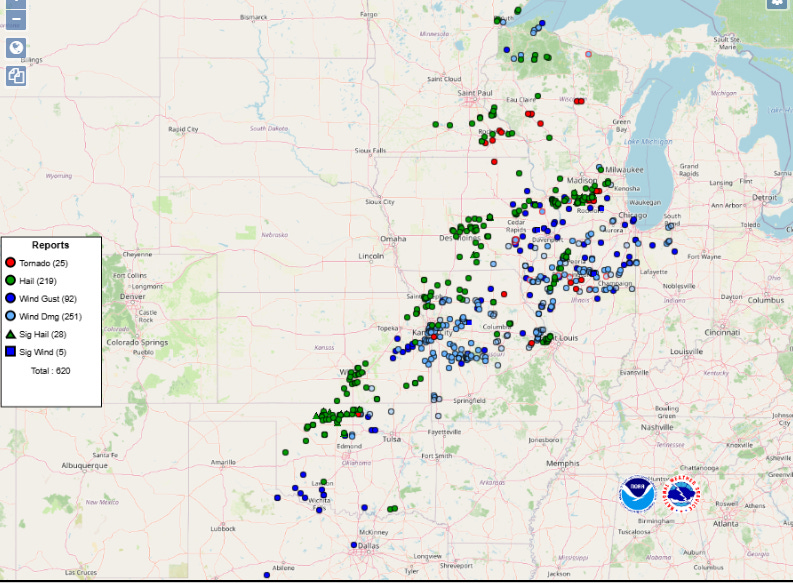
Turning to weather, the severe weather outbreak anticipated for Friday worked out about as anticipated. The large number of storms led to a lot of interactions between storms which helped keep the tornado situation from getting out of hand, but there were still a number of tornadoes reported across the Midwest. The most significant ones appear to have occurred in parts of Wisconsin and northwest Illinois where several locations had serious damage. Intense lines of severe storms caused extensive straight line wind damage across parts of Wisconsin, Illinois and Missouri leaving more than 100,000 customers without power at the peak of the storms last night. Nearly 30 reports of very large hail (greater than 2”) were scattered from northern Oklahoma to the upper Mississippi Valley.
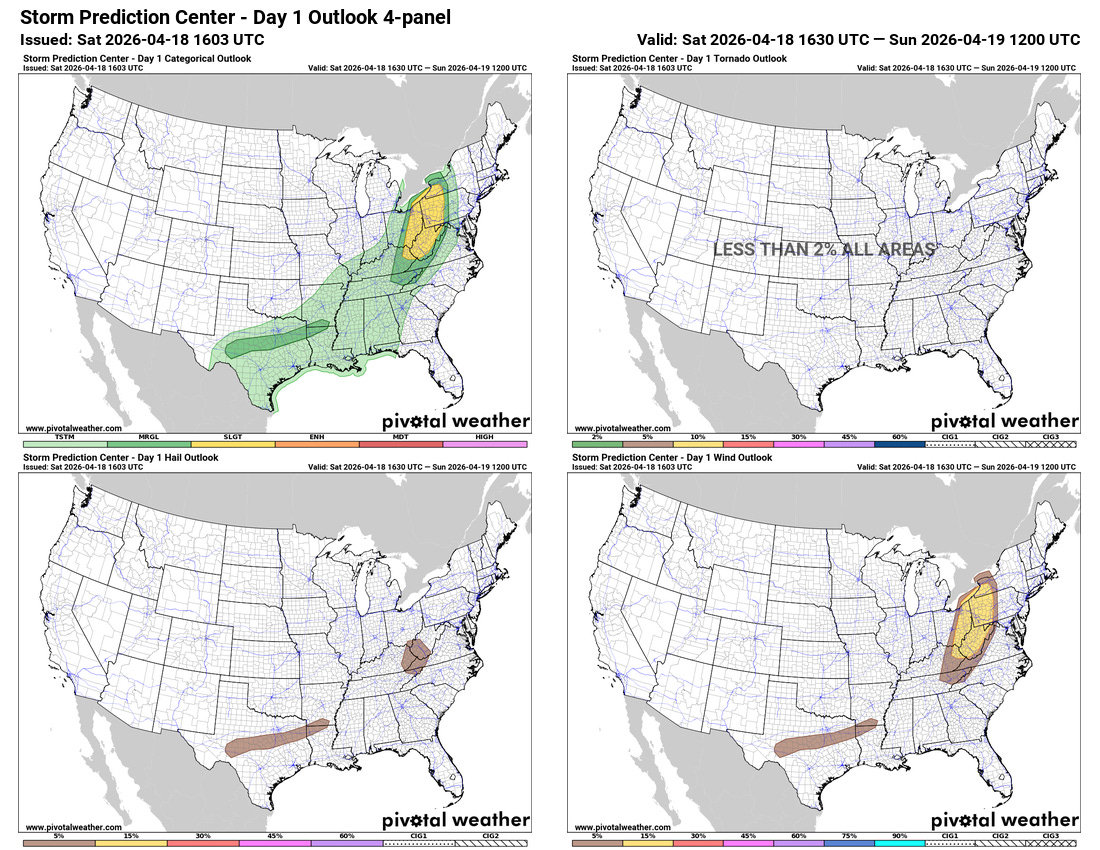
Today should be a much tamer day as far as severe weather, but a few severe storms are possible along the cold front shifting to the southeast. A slight (level 2 of 5) risk is in place in the eastern Great Lakes and middle Appalachian regions where a few severe storms with damaging wind are possible along the front this afternoon and evening.
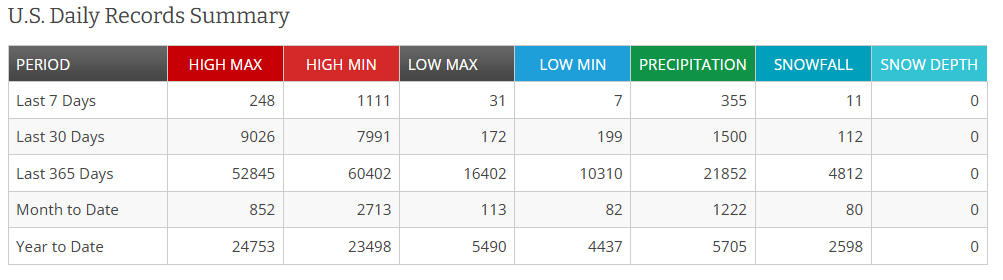
With all of the severe weather this week, I have not talked as much about the record warmth, but there has been plenty of it again over the last several days, particularly across the eastern half of the country. Record highs have been common in the Southeast and Mid-Atlantic, and per the table above record warm minimums have been particularly widespread. Washington DC, Philadelphia, and Baltimore all had their first 90F day this week, weeks before the average first 90F which typically comes later in May (thanks to my colleague Victor Murphy for this info). Capital Weather Gang noted yesterday that Washington has already had a dozen days with a high of 80F or higher this year, the most on record so early.
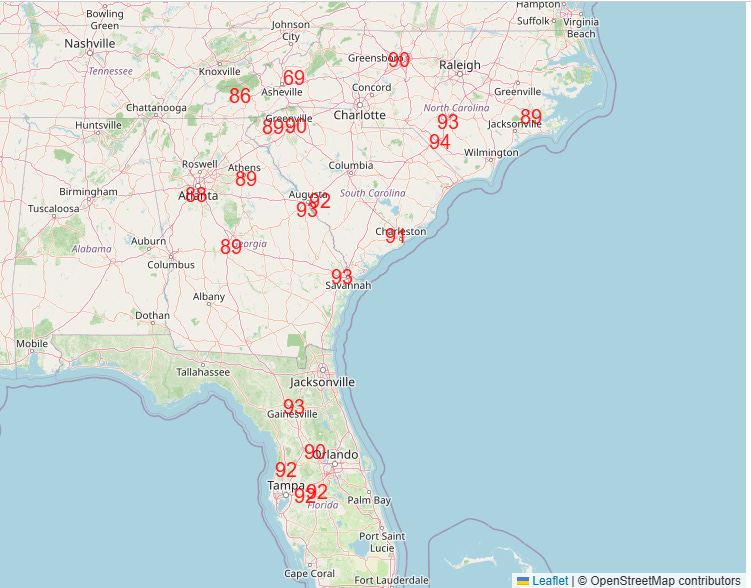
Today will see one more day of numerous record highs across the Southeast, before the cold front finally brings some cooler air to the region.
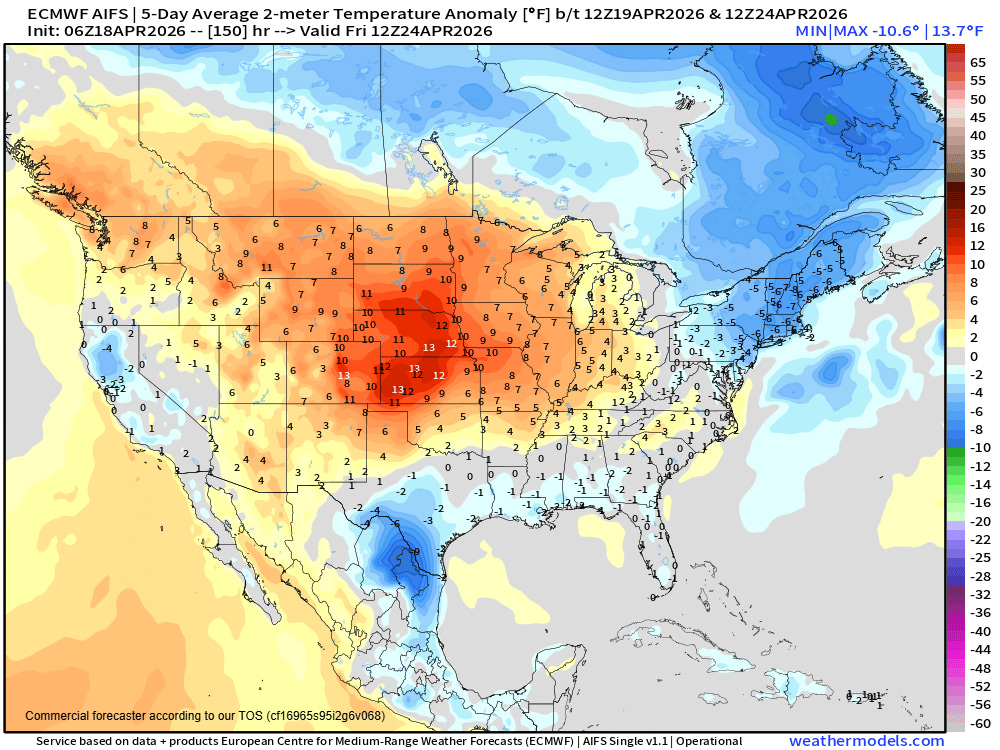
The air moving into the Northeast behind this front will be quite cold for late April, with some record low temperatures possible Tuesday. Meanwhile, much of the remainder of the country will once again see above normal temperatures on average for this upcoming work week.


Leave a Reply