
Heat expected to continue to be an issue into next weekend for many areas
Sep 12, 2026
I want to start off today with a quick apology — I recorded a video yesterday afternoon to give an update on the weather headed into the weekend, but I accidentally sent it out to paid subscribers only instead of everyone. I fixed that, and if you’re interested in watching it, here is the link.
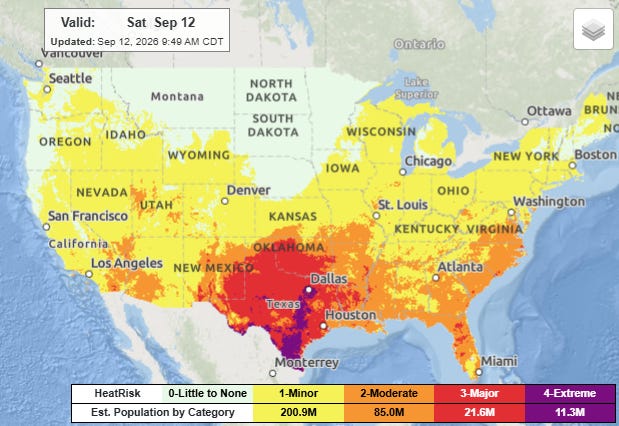
It is a Saturday in September, and for many people in our country that means it is a Saturday to watch or attend college football. For the second weekend in a row, extreme heat will be a significant concern for many games.
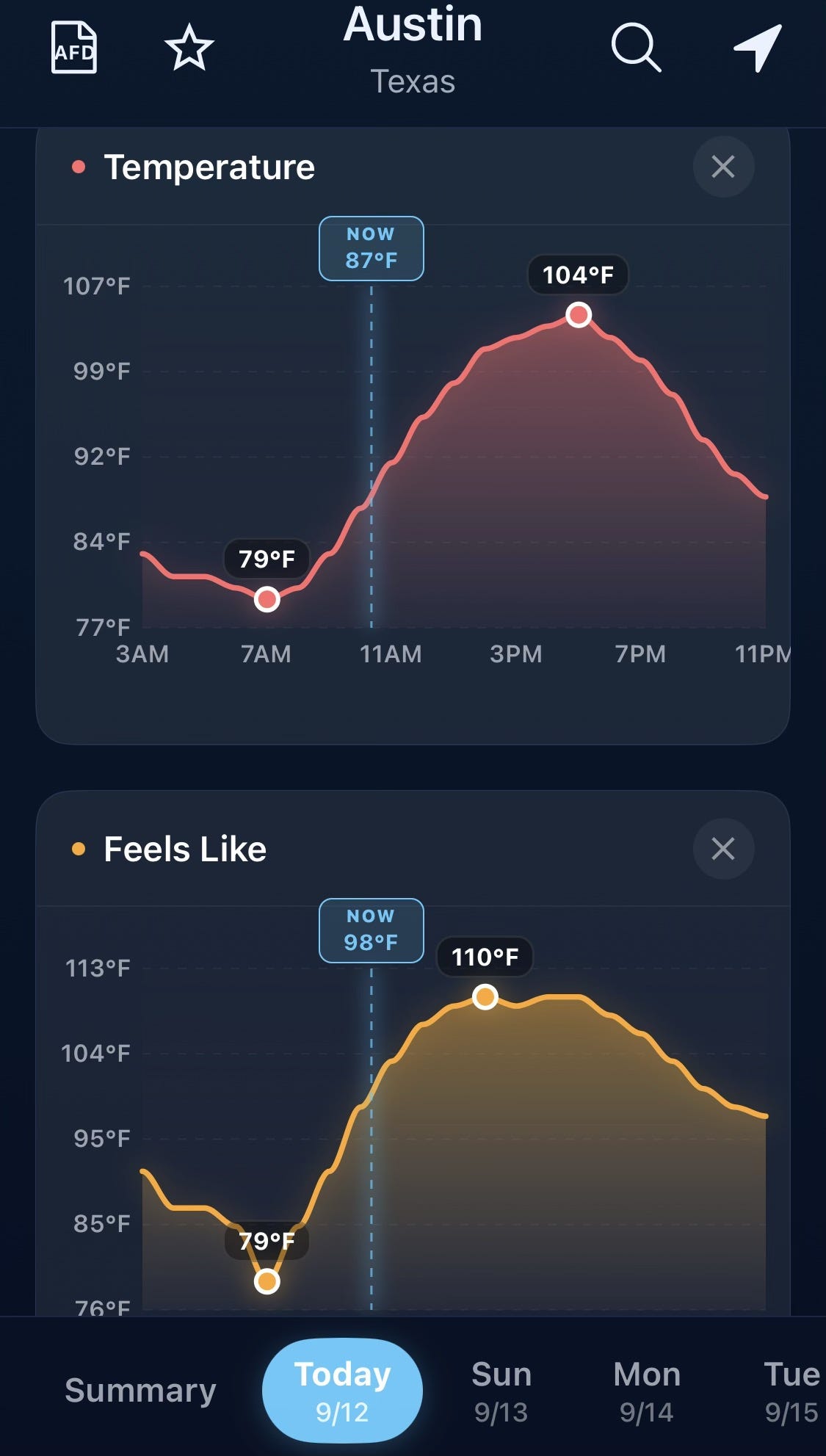
One of the most anticipated games today will take place in Austin, where the University of Texas is hosting Ohio State in a game that kicks off at 6:30 pm CT. Austin is right in the middle of a large area of extreme (highest) heat risk for today that encompasses the Interstate 35 Texas corridor. Ambient temperatures are forecast to peak around 105F this afternoon, and combined with dewpoints in the upper 60s and lower 70s, heat index values should peak around 110F. While that will be during the afternoon pregame tailgating, heat index values are expected to still be above 100F at kickoff and only slowly fall through the evening.
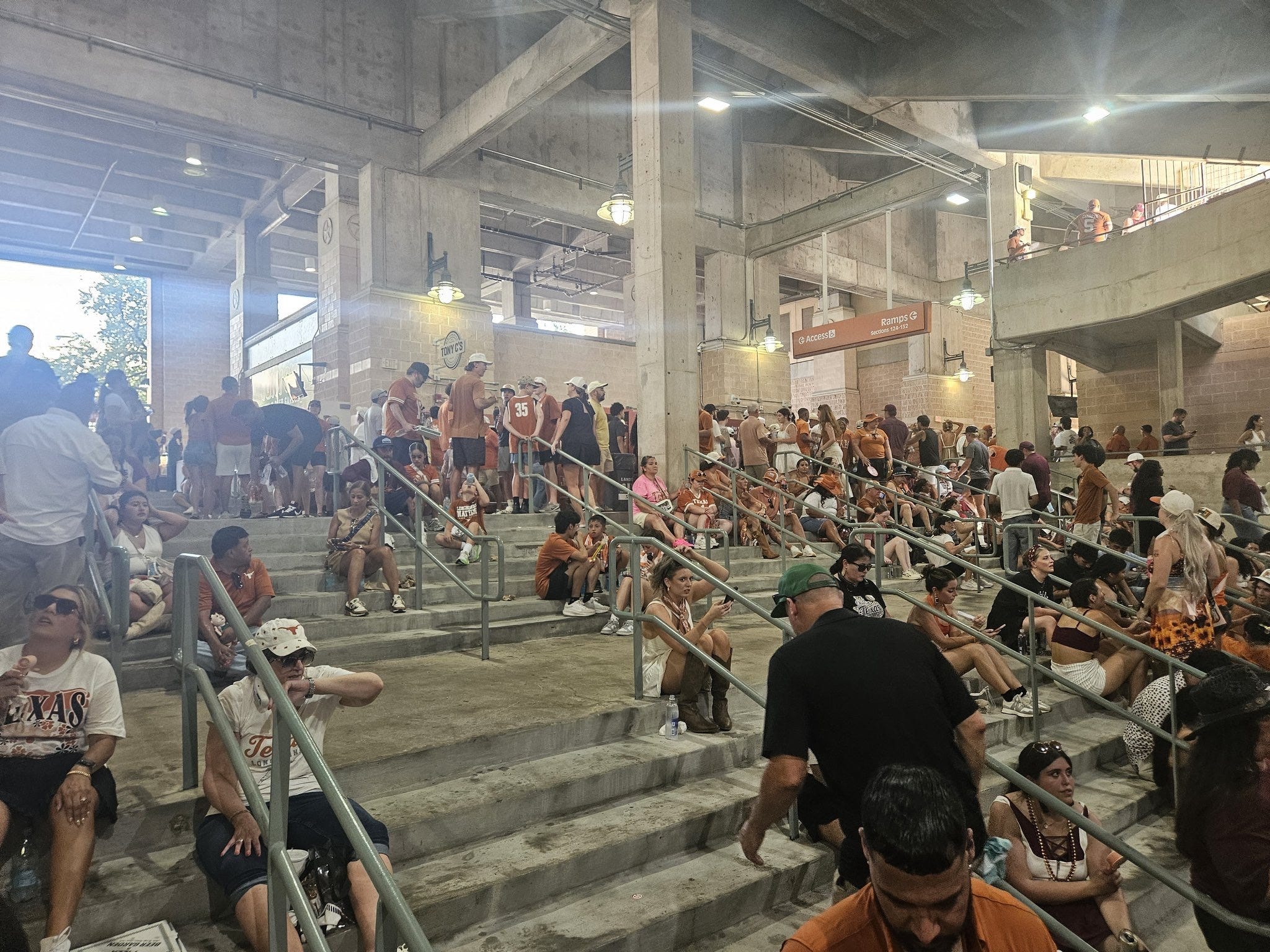
Today’s game comes after last Saturday afternoon’s UT game was marred by numerous issues with the heat, with a number of people having to be treated for heat-related illnesses and as many as a dozen people transported to hospitals for heat and related symptoms. The university has added extra hydration stations for today’s game — but with a much larger crowd expected for this high profile game and the expectations that thousands will be attending game-related activities from the morning through the game itself, the potential for serious heat-related issues is a real concern.
Last weekend the heat was even more widespread across the country, extending into the Midwest and East. One of the games impacted was at the University of Iowa, where marching band member Derek Phillips collapsed in the heat during the first half and tragically passed away on Tuesday. A KCRG-TV investigation found that the Wet Bulb Globe Temperature — a parameter that combines temperature and humidity and is used by many entities including the US military to regulate outdoor activities — was well in excess of Iowa High School Athletic Association thresholds for canceling outdoor activities.
This tragedy hit me particularly hard as both of our kids were in the Pride of the South marching band at Ole Miss for all four years of their undergraduate work. We spent many hot afternoons in The Grove while they performed at pre-game events, and I have particular memories of roasting on the metal bleachers of Vaught-Hemingway Stadium in the blazing September Mississippi sun for late morning and early afternoon games. And we were just sitting in the bleachers in shorts and a t-shirt; our kids were in full band uniforms marching and performing in that heat.
The incident in Iowa is a stark reminder that college football being played in dangerous heat is not just a threat to the players, it is a potential life threatening issue for everyone involved. While the players are probably the most directly at risk due to their athletic exertions, they at least have medical personnel and trainers monitoring them and ensuring adequate hydration (in theory, anyway). Kids like band members and just the general college population tailgating and partying obviously do not have that medical attention, and in extreme heat like what is expected today in Austin might be at even greater risk.
I am not naive — I understand that college football is huge, multi-billion dollar industry in this country and there are serious financial pressures to ensure “the game goes on.” But with extreme heat lingering later into the fall in many areas and college football leaders exploring an earlier start to the season, extreme heat is a health safety issue to the game that should not be ignored.
My colleague Dr. Marshall Shepherd from the University of Georgia has been writing extensively on this topic in his science column in Forbes Magazine. He notes that college football has taken proactive measures to try to mitigate risks from other weather hazards such as lightning. It seems clear that somehow the game must work to take the dangers of extreme heat just as seriously if we are going to avoid what they will be doing today in Iowa City this evening: remembering a wonderful young man lost way too soon.
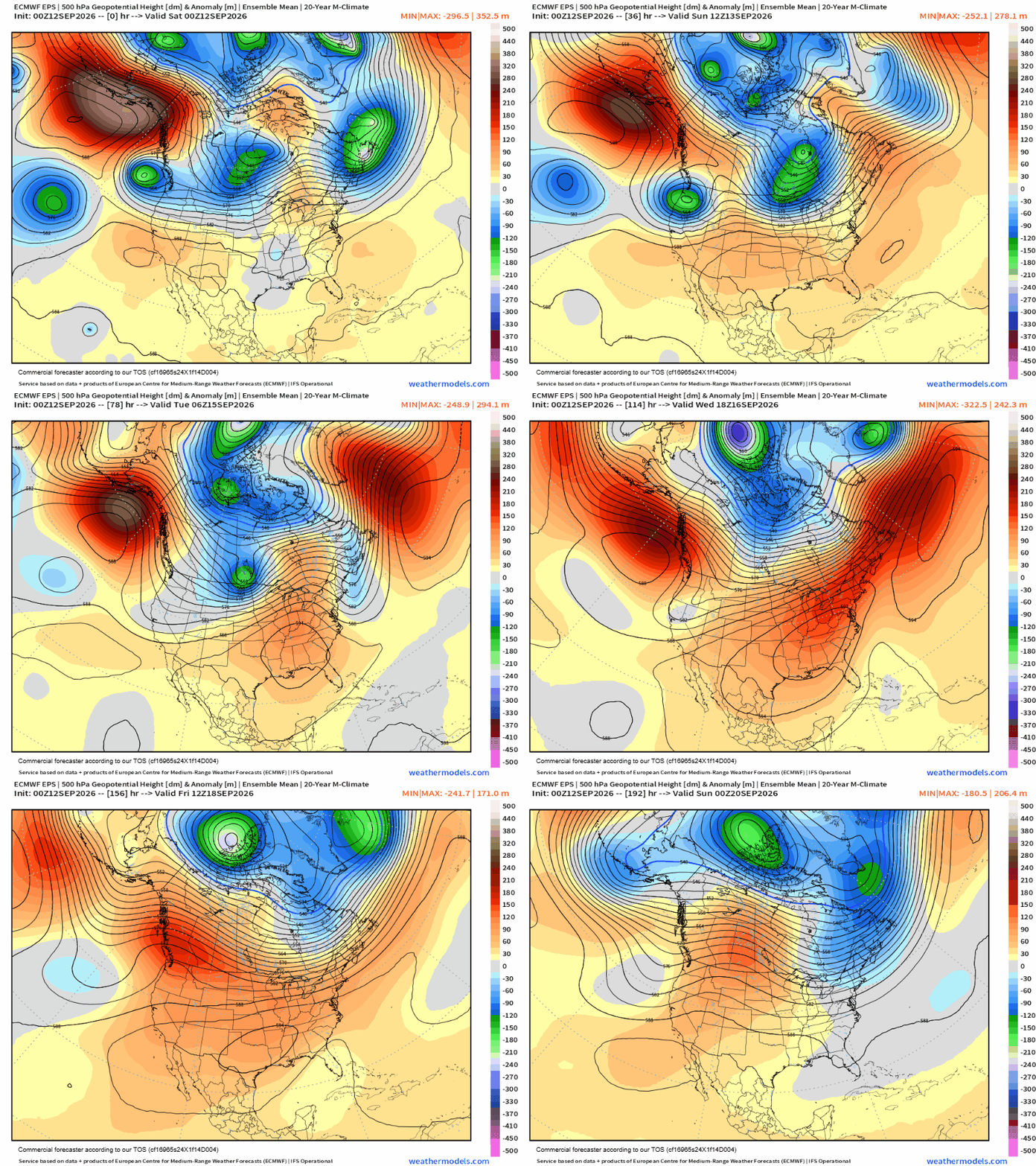
Unfortunately, the heat does not look as if it is going anywhere anytime soon. Another unusually intense area of high pressure aloft will build across the eastern half of the country this week, and expand west into next weekend. Numerous record warm temperatures (highs and lows) are expected across the south central United States again through the week, with unusual warmth and humidity building back into much of the East as well.
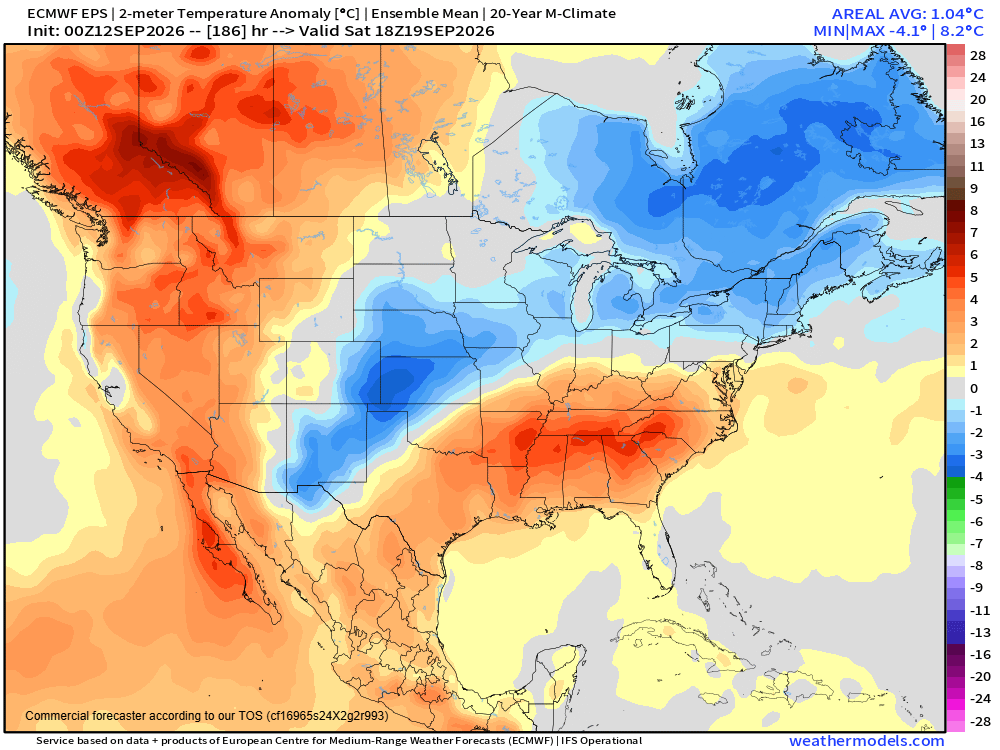
By next Saturday, a cold front will bring some cooler conditions to the Northeast and Great Lakes, while much of the rest of the country will see much warmer than normal weather. Of course the later we get into September, “normal” is gradually getting cooler — but still, significant heat and humidity is expected across the southeast quarter of the nation. The other area that will see below normal temperatures at times — including next weekend — will be from New Mexico in parts of the upper Midwest. These cooler temperatures will be associated with clouds and showers/storms as monsoonal moisture is pulled north and northeast around the periphery of the upper level high over the Southeast.
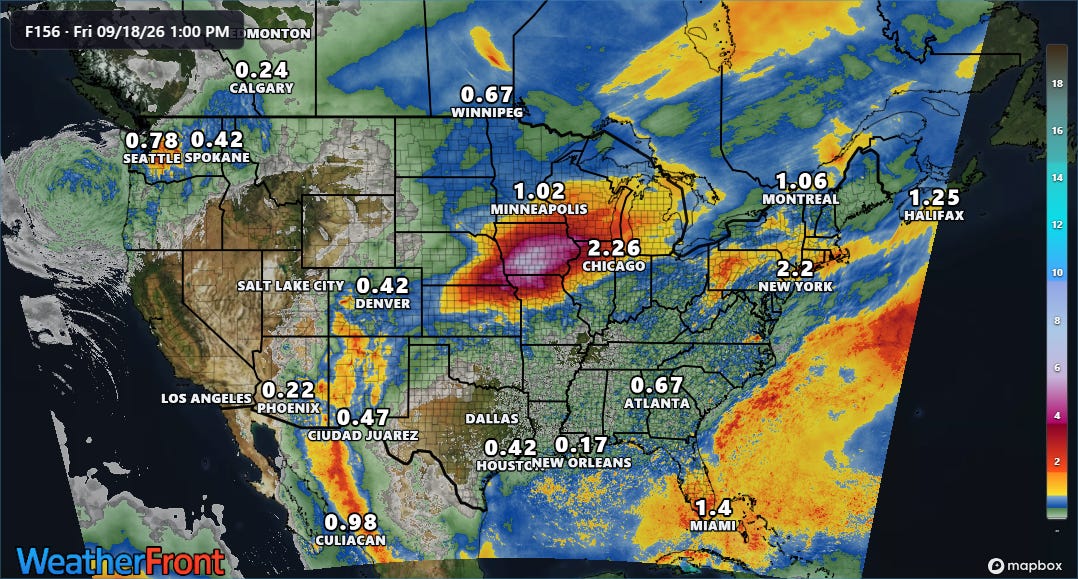
While much of this region is in need of rainfall with drought ongoing, waves of repeat showers and storms could eventually cause some concerns with flash flooding, particularly across the Midwest where thunderstorms with high rainfall rates will occur.


Leave a Reply