
Aging systems necessitate needed transitions to new systems – but with safeguards
2 hours ago
There has been a tremendous amount written in the last 72 hours about the FAA comms outage on Friday afternoon that caused a nationwide ground stop of the national air space.
This now widely shared thread by a networking expert has resonated with me as someone who was a longtime federal manager. I encourage you to take a look at it for what seems a reasonable, fact based analysis of what transpired.
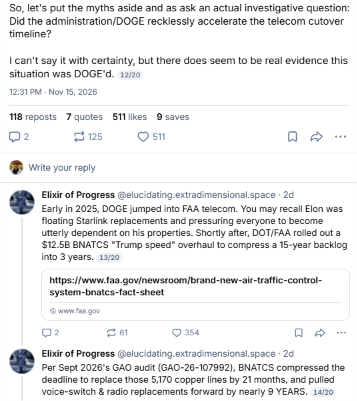
It is a long, 20 post thread — but I wanted to highlight these few posts as I think they have some relevance for some of the NOAA/NWS comms and infrastructure topics that I have discussed over the last 18 months. NWS faces a very similar situation to the FAA with regard to aging communications — copper lines and outdated internet comms are ongoing issues — and IT infrastructure that has been a growing problem for literally decades.
While undoubtedly there are many reasons and problems that resulted in these issues languishing for so long, the DOGE approach last year of cutting hundreds of people at the actual technical level who understood the aging technology while at the same time pushing rapid transitions was not helpful either. The status quo of the last 25 years is not optimal — but neither is the “move fast and break things” approach.
Perhaps this is a situation where the phrase “with all deliberate speed” would fit, i.e., move as fast as possible while ensuring adequate caution. As with the FAA, the NWS is a life-safety agency in which its communications and infrastructure must perform and have redundancy. Multiple incidents in the last few years have exposed many weaknesses in the NWS’ infrastructure, and the agency will be navigating in the next few years a (hopefully) rapid transition to a newly developed IT and comms infrastructure as well as developing requirements and implementation plans for a new weather radar network. Given the growing weaknesses in these systems, it is certainly crucial that these processes be done as rapidly as possible — but without sacrificing the high performance and redundancy needed for critical NWS systems.
Politico climate and weather reporter Chelsea Harvey reported over the weekend that the NWS has made significant process in hiring new scientists and technicians to replace the 600 experienced people that were lost during the OPM/DOGE led retirement incentives last year. As I have been saying, though, these new hires will take months and in some cases years (depending on position) to be fully trained. For technicians dealing with the NWS’ aging IT, comms and radar systems, learning these systems will be a particular challenge, which yields a paradox. On one hand, the quicker the NWS can transition off of these systems, the more rapidly these new technicians can begin working with modern systems they will naturally be more familiar with. However, focusing too heavily on transition could leave the legacy systems even more vulnerable while they are still being relied upon for life safety warnings and forecasts.
The outages of the last several days of not just the FAA air traffic control system but a number of other major IT and comms systems demonstrates that we as a society are truly in a fluid and transitionary period as far as technology and IT. Agencies like the NWS are particularly vulnerable due to having notably aging systems — the NWS main IT system (AWIPS) was developed and deployed in the 1990s, and the NEXRAD radar system was developed in the 1980s and deployed in the 1990s (with later updates to some systems). It will be incumbent on agency and Congressional leadership to ensure that the resources — human and fiscal — are available to navigate this critical transition period in a manner that maintains public safety while pushing forward with new, better and more reliable technology and science. The recent moves in the Senate to pass the Weather Act and push increased funding for NWS staffing are encouraging — but robust staffing without reliable, state-of-the-art communications, IT and observing infrastructure will be of limited value.
There is a lot of weather to talk about today as well, so I am going to do a separate post later this afternoon or evening on that — be on the lookout for it.


Leave a Reply