
In the US, Phoenix keeps racking up the heat records
Aug 26, 2026
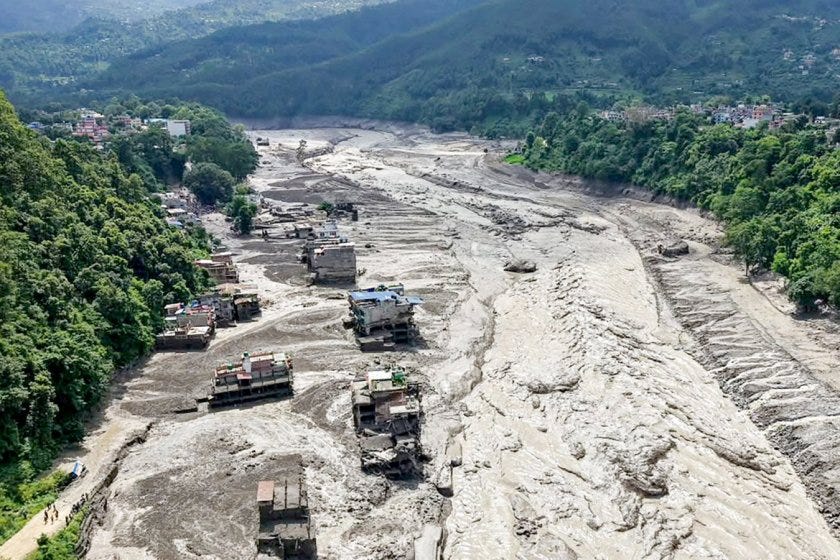
A massive flash flood and mudslide swept down several river valleys in the border region of Nepal, Tibet and China early this morning, killing at least 150 people and leaving hundreds more missing and feared dead. After being initially suspected to have been caused by an earthquake, further scientific analysis by the US Geological Survey and other scientists determined that the observed seismic waves initially reported as an earthquake were actually the result of a surface motion from debris flows and a landslide.
Scientists now suspect that a glacial collapse was responsible for the catastrophe. Geomorphologist Dr. Daniel Shugar from the University of Calgary told New Scientist magazine that a glacier at about 17,000 feet AGL appears to have collapsed directly into a river valley several thousand feet below. “Comparing satellite imagery from yesterday and today, the glaciers in the vicinity do seem to have lost a fair bit of snow in the last 24 hours,” he told the magazine. “My guess is that snow melt, and glacier ice melt as well, injected a lot of liquid water into the glacier, which percolated down to the bed and lubricated it. That was enough for it to collapse.”
Shugar indicated that “it’s not that much of a stretch to think, yes, we’re seeing one terrible ramification of human-caused climate change.” Meteorologist Chris Gloninger did an excellent video explaining some of the scientific evidence for how global warming is impacting glaciers in this region of the world and how that likely played a role in the catastrophic event.
Dr. Shugar — who is an expert in glacier and mountain geological change — said that videos (caution, graphic content) of the flood are “off the charts. This is horrific. It looks like this will rank very high on the list of historic mountain disasters in terms of people killed, and cost.”
Speaking of global warming, today Phoenix yet again tied a record high temperature, reaching 117F. Not only did this tie the record for the date, it also tied for the third latest 117+ reading at Phoenix — the record latest date is September 28, set in 2024. Before 2011, the latest 117F had ever been observed at Phoenix was July 28th. Since then, it has been recorded in August or September in five different years. With a low of 91F, the average daily temperature for today was 104F, which trails only August 29 2023 for the warmest day on record so late in the season.
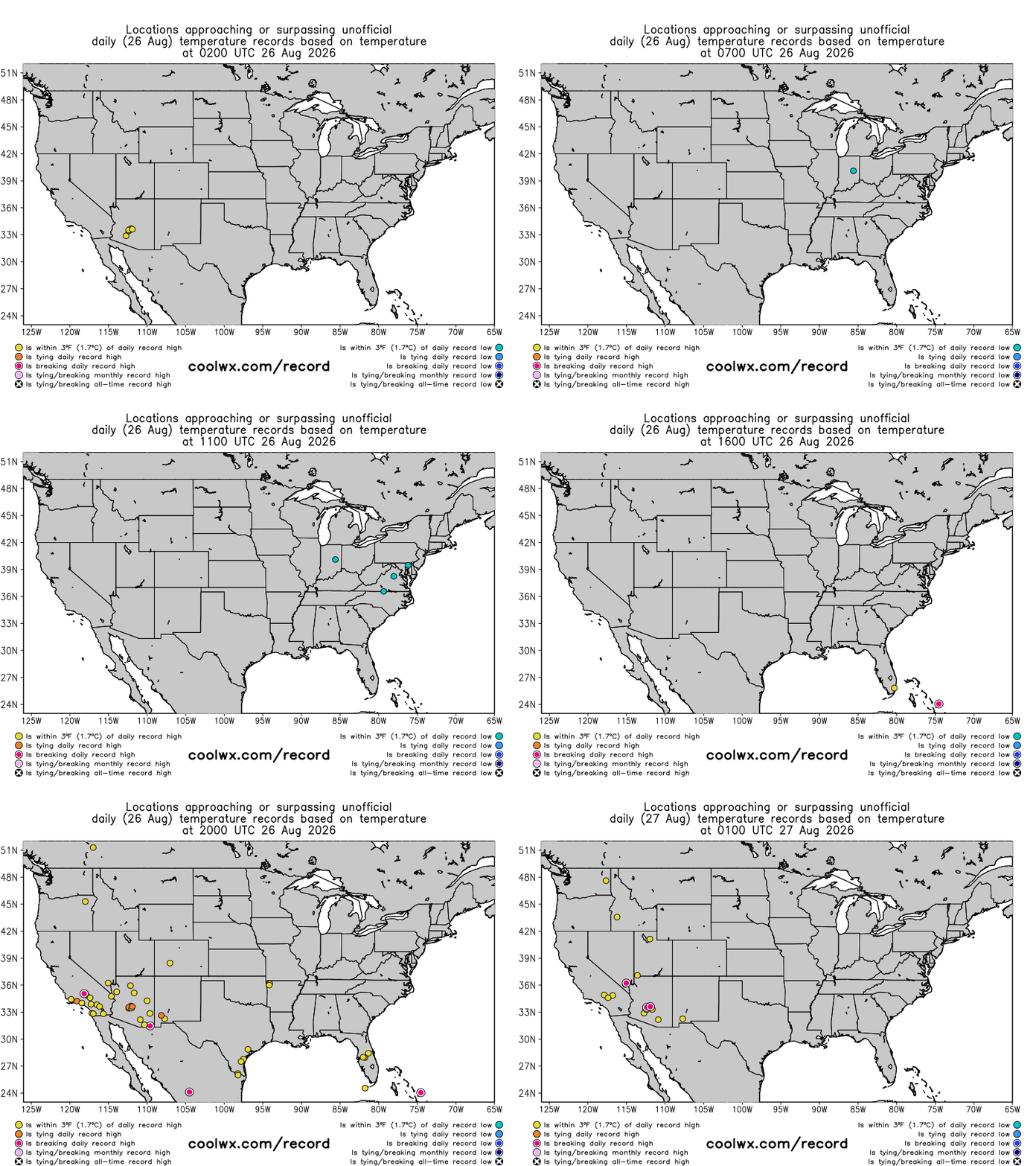
A number of other locations in the West set record high temperatures today as well.
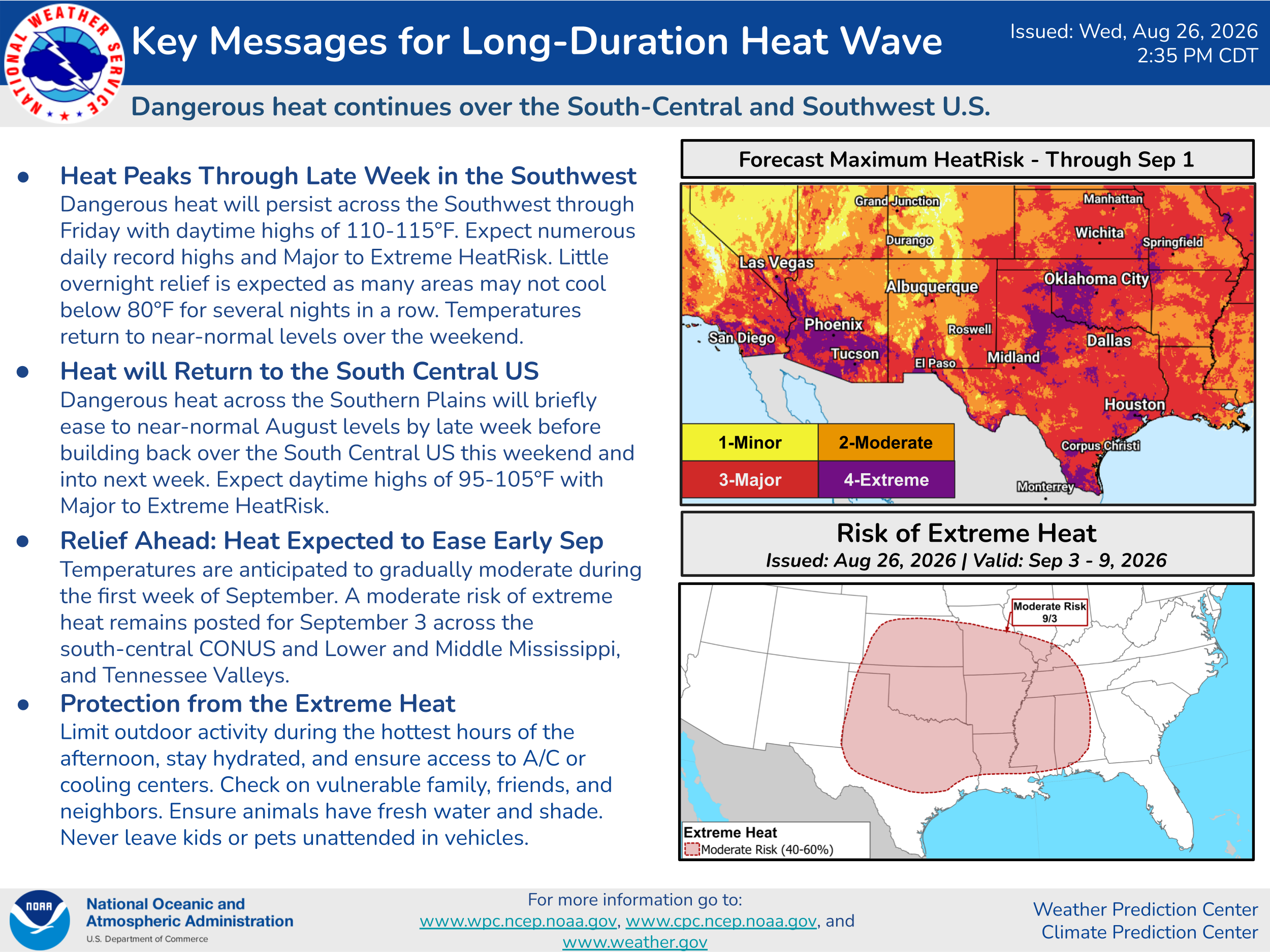
Extreme heat is expected to continue in the Southwest the next couple of days, before shifting back east to the south-central US by early next week.
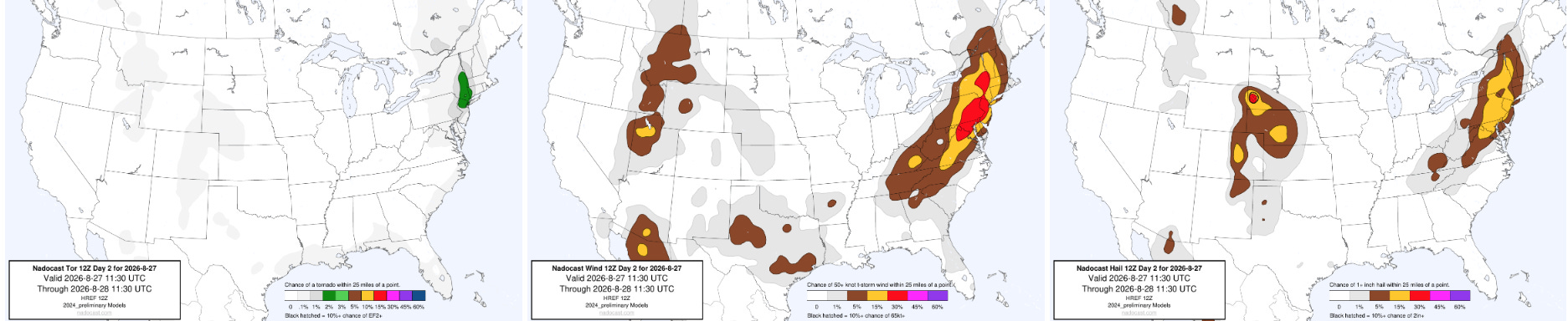
A return of greater heat and humidity is also anticipated over the East by early next week. Before that happens, though, another disturbance moving through the upper level trough of low pressure that has been dominating the region the last several days will bring another round of severe weather to the East Coast Thursday into Thursday evening. Damaging straight line winds will be the primary risk, but a few tornadoes and incidences of large hail are also possible.
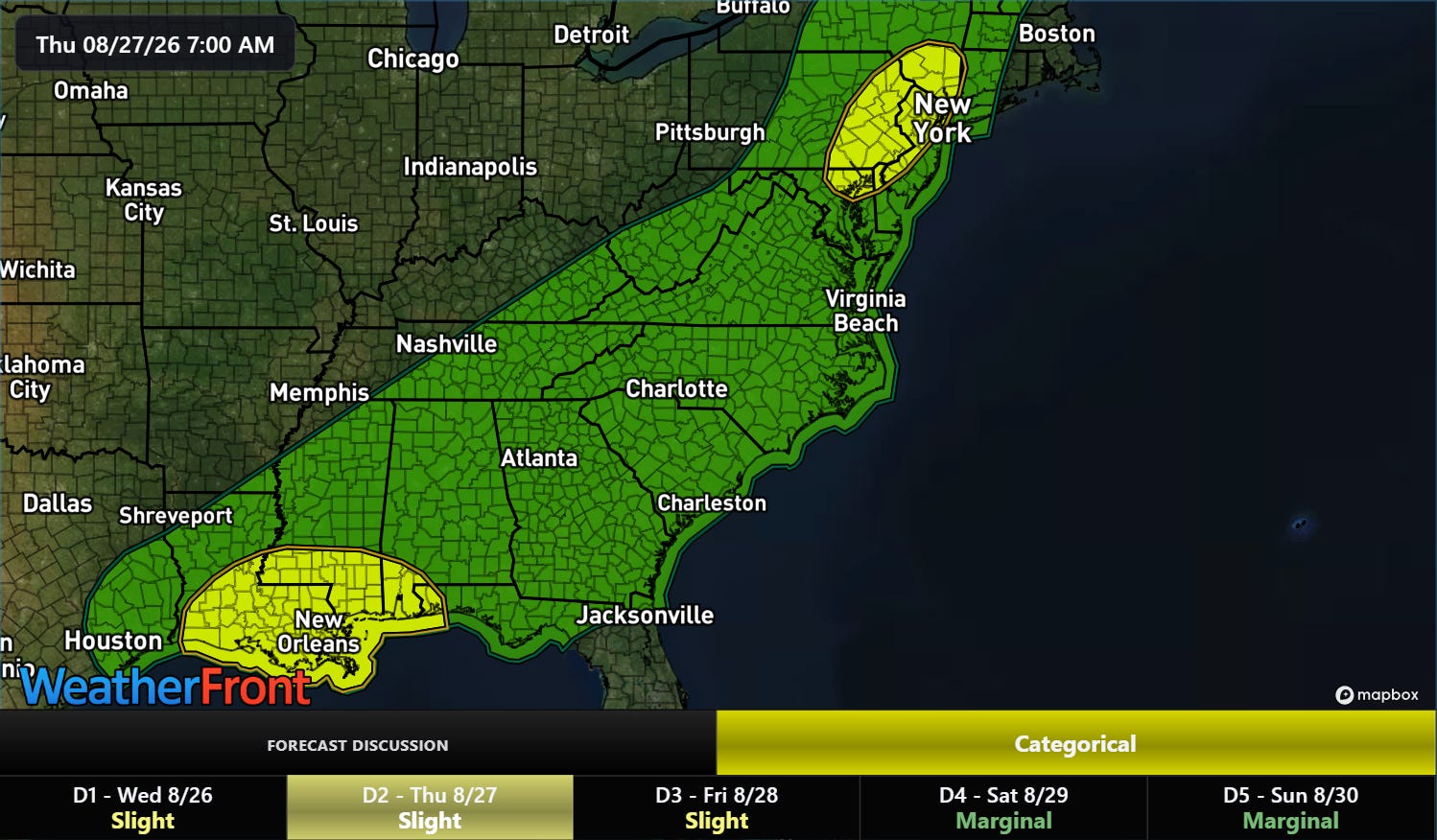
Flash flooding will also be a risk in parts of the I-95 corridor from Baltimore to north of New York City — as well as along the central Gulf Coast.


Leave a Reply