
Global sea surface temperatures also at record warm levels
Sep 10, 2026
Summaries for August as well as Summer 2026 are starting to roll in from climate monitoring groups, and unsurprisingly the findings are that it was an incredibly hot period. Earlier today Copernicus, the European Union’s climate monitoring entity, reported that their analysis found that August 2026 was the hottest month on record globally ever, tying July 2023. The June-August period (summer in the Northern Hemisphere) for 2026 was also the warmest on record, tying 2024.
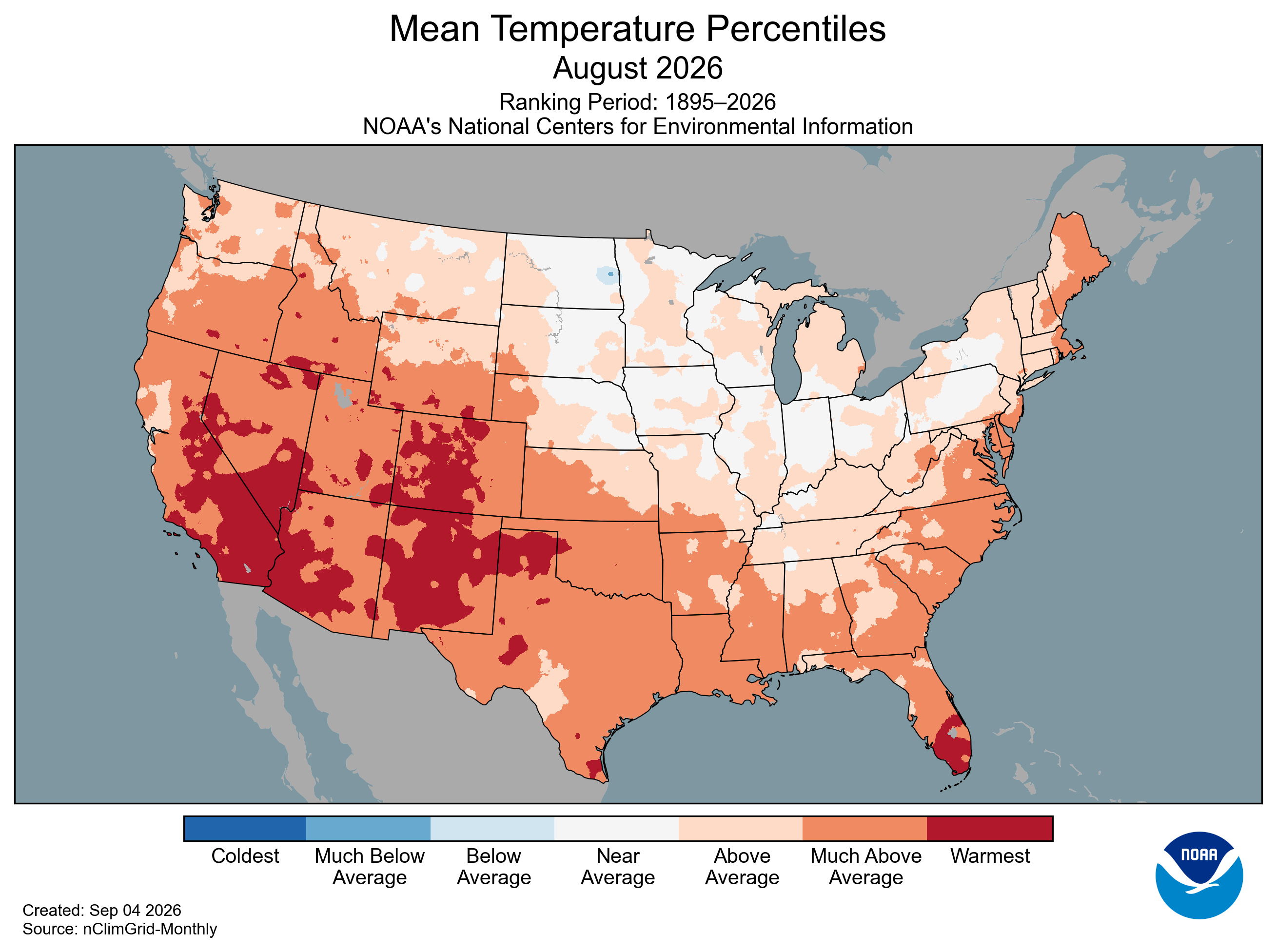
On a national level, NOAA reported on Wednesday that for the contiguous United States (CONUS) August 2026 as well as the entire summer (June-August) were the hottest on record. August 2026 had a mean temperature of 75.6F, 3.5F above the 20th century average, while the summer average temperature broke the previous warmest summers — 1936 and 2021 — by 0.4F. This means that there have now been two summers in this decade as hot or hotter in the United States than the hottest year of the Dust Bowl era.
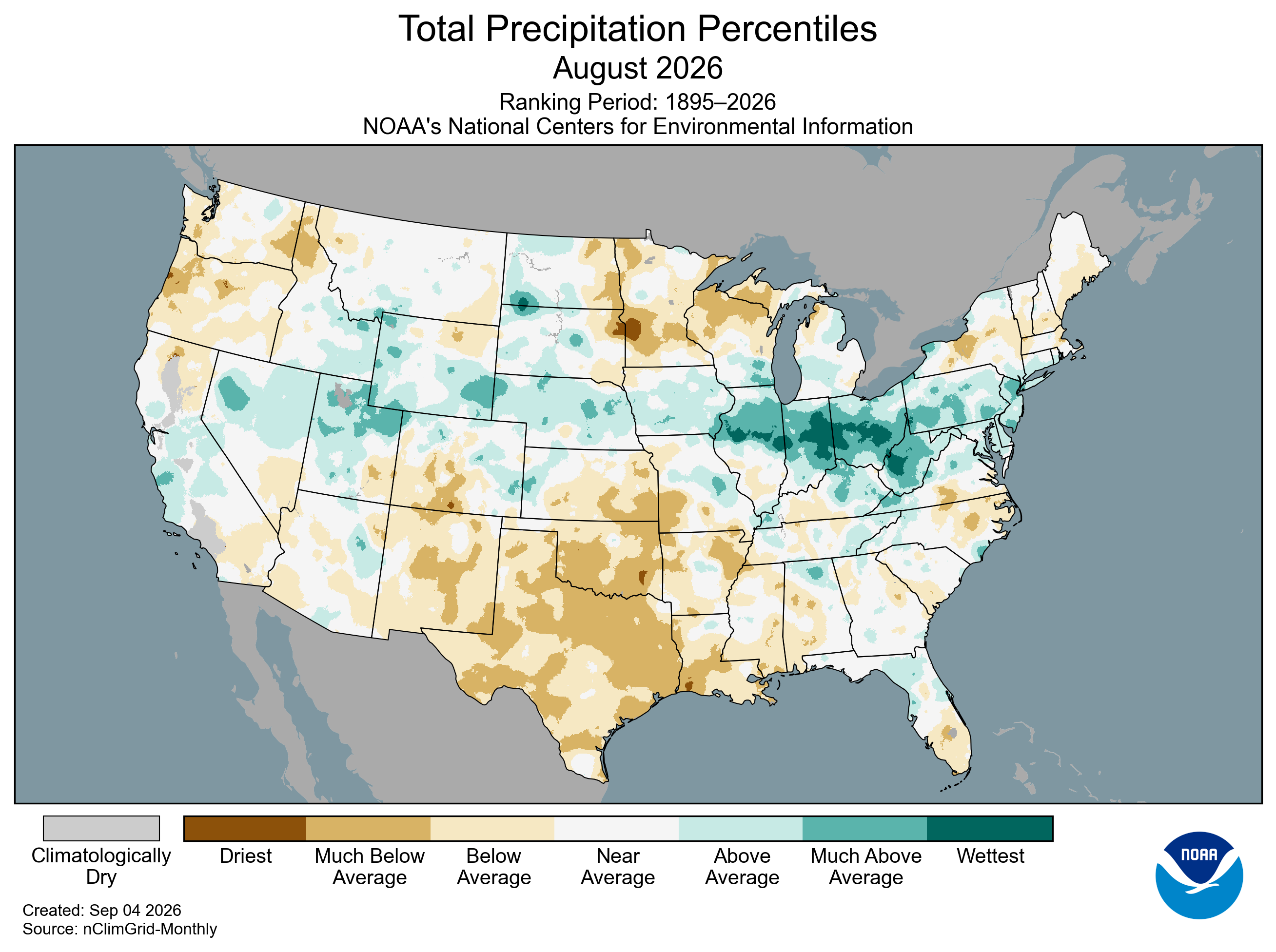
Speaking of the Dust Bowl and drought, drought also expanded significantly across the country in August, with large parts of the southern half of the country experiencing well below normal precipitation. Parts of the Northwest and Upper Midwest were also drier than normal, with areas of southwest Minnesota and northeast South Dakota experiencing their driest August on record. This contrasts with areas from northern Illinois through the Upper Ohio Valley which saw their wettest August on record as numerous waves of thunderstorms brought severe weather and flooding to this region.
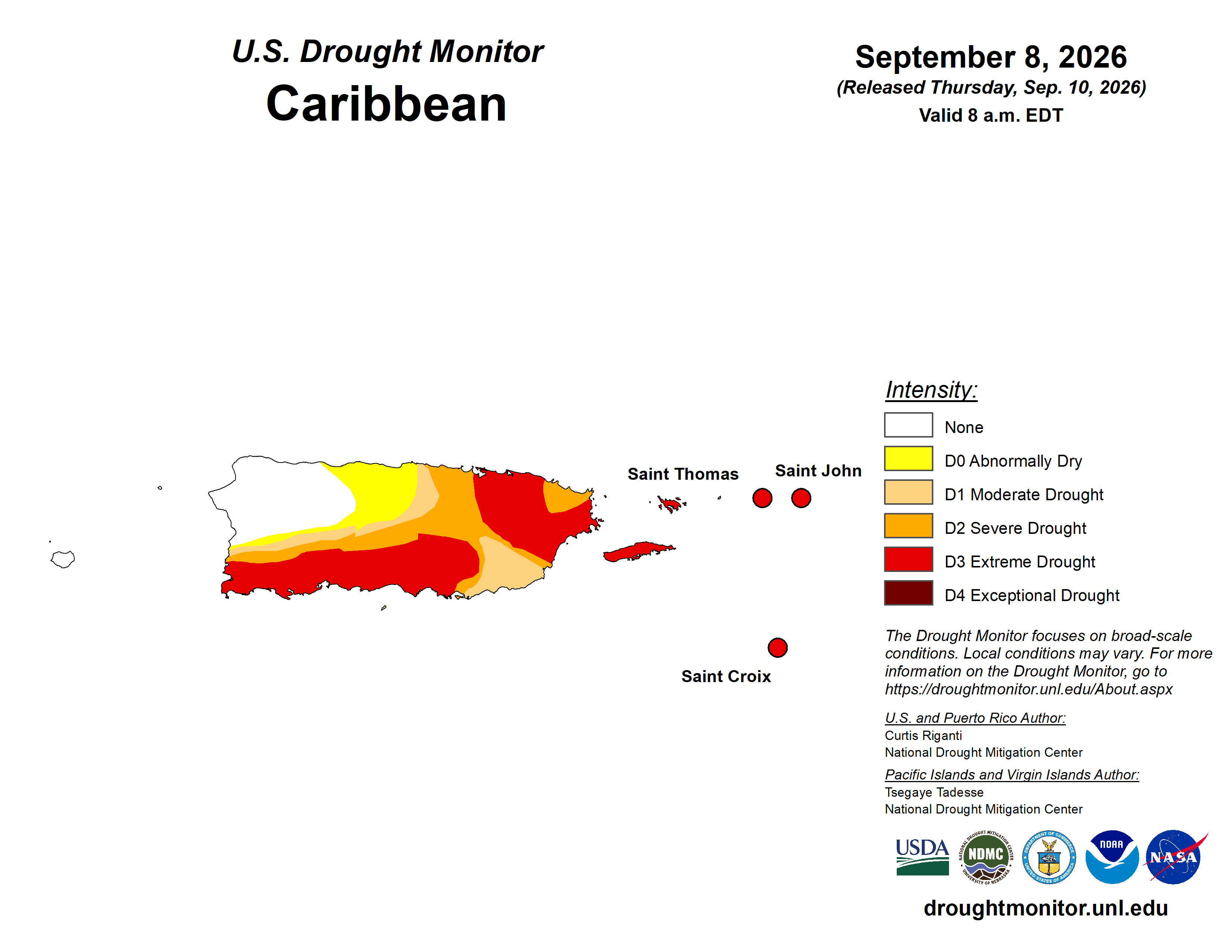
Drought has also continued to expand in Puerto Rico and the US Virgin Islands, with many areas now experiencing severe drought. This includes San Juan, which experienced its driest summer by far: 3.98” of rainfall for the 3-month period was well below the prior record driest summer of 6.67” set in 1980. San Juan has received some beneficial rainfall of about 2” in the last few days, but a drier period looks to setup again heading into this weekend.
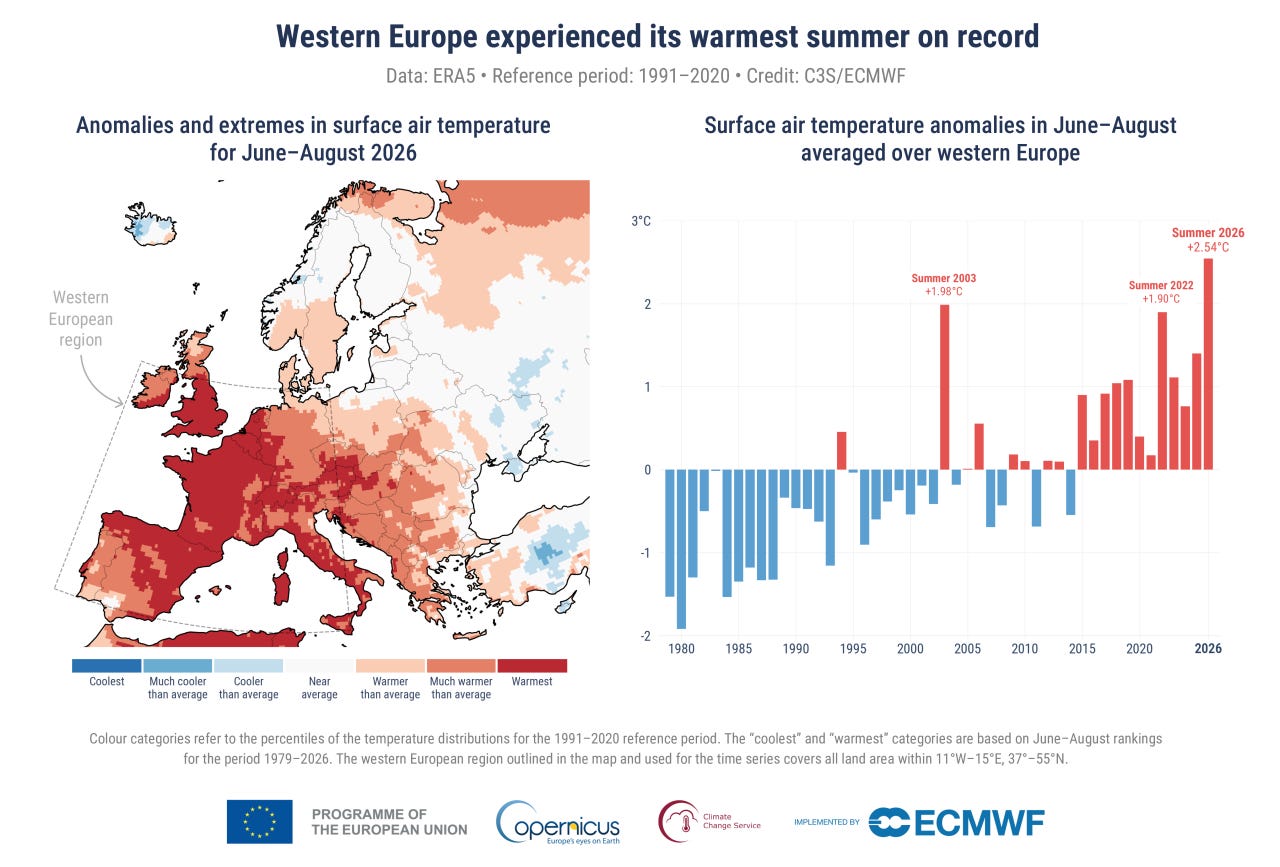
Of course, given that this was the warmest June-August period on record globally, the US was not the only country dealing with the heat. Europe as a whole had their third-warmest summer on record, but it was the warmest summer on record for most of western Europe including England, France, Benelux, Italy and northern Spain.
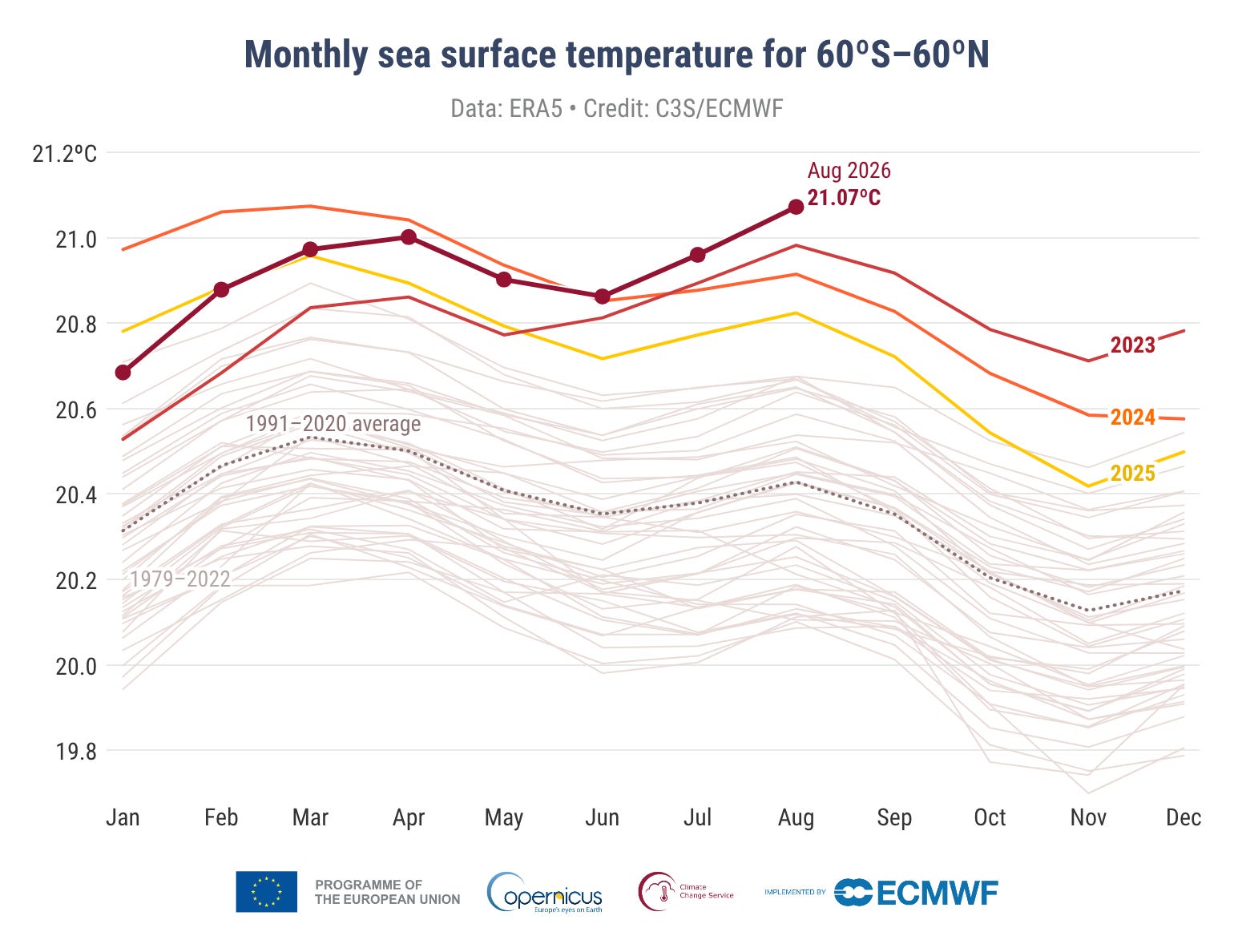
And it’s not just the air, the oceans are also at all time record warm levels. The average global SST for August 2026 equalled the record warmest previously observed value from March 2024. Copernicus notes that it is particularly notable that this record was reached in August because “the highest monthly SST typically occurs in March, while August usually marks a lower, secondary maximum.” Since June 19th, the daily global SST has been the highest on record for each day.
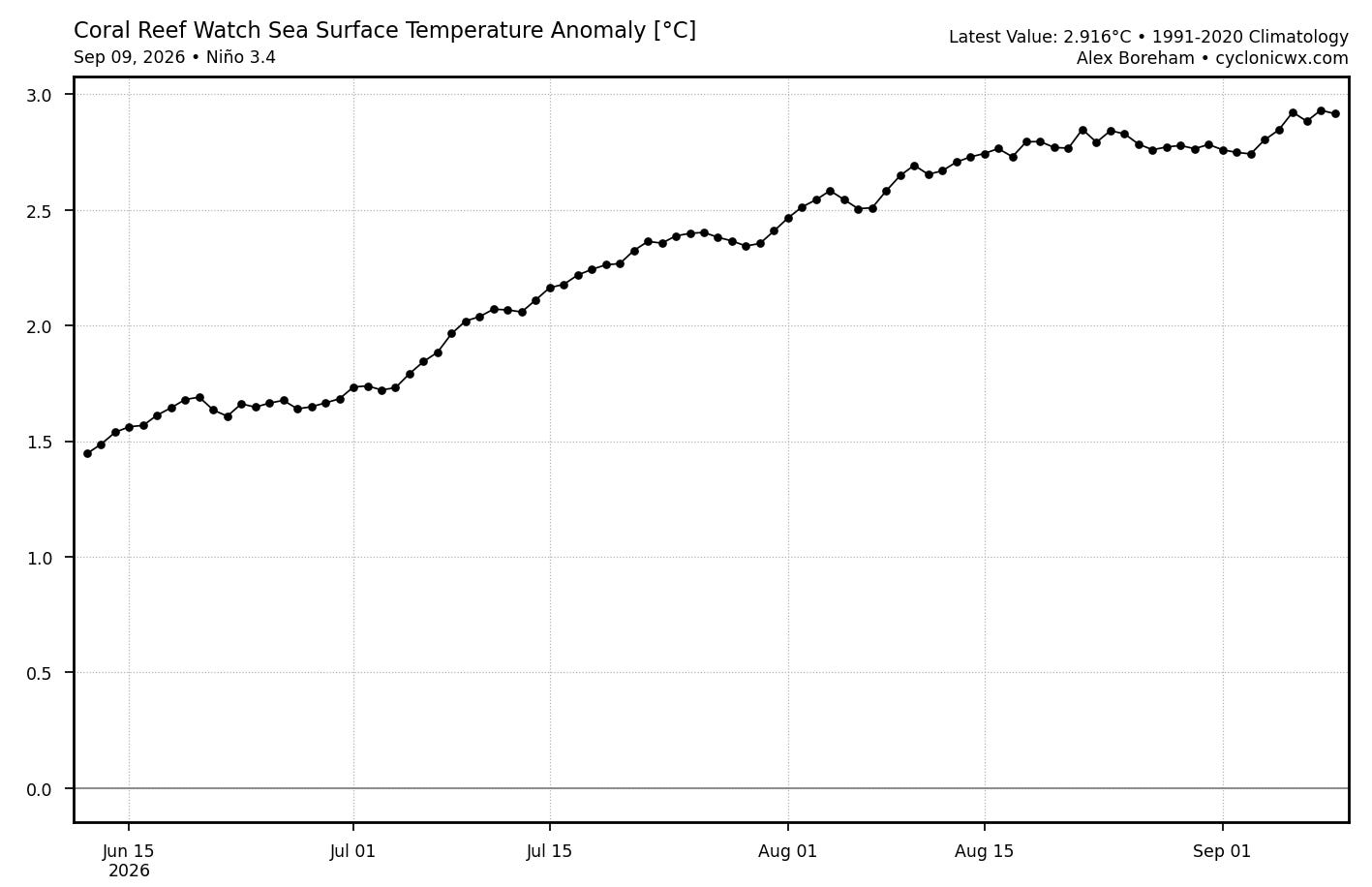
None of this is particularly surprising given the growing and potentially record El Niño, which has seen a bit of a surge again in the last week and is now approaching a Niño3.4 value of +3.0C.
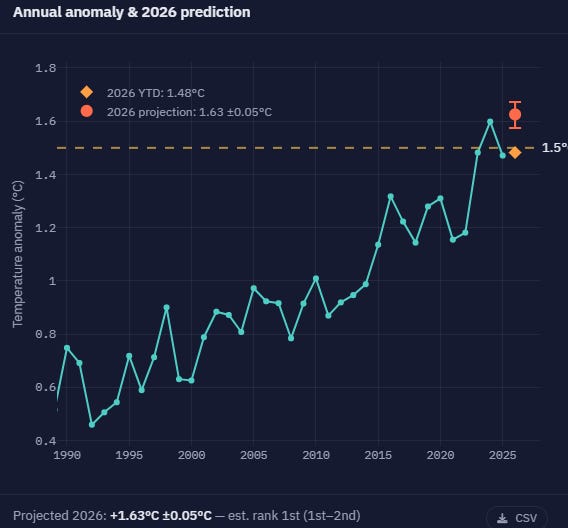
Strong El Niño events typically correlate with particularly warm global temperatures, and climatologist Zeke Hausfather’s projection on his Climate Brink webpage now shows a high likelihood that 2026 will end as the warmest year on record globally. Typically, the year following a strong El Niño is even warmer — so even if 2026 does set a new record, it is likely to be short lived with 2027 reaching new heights in temperature.
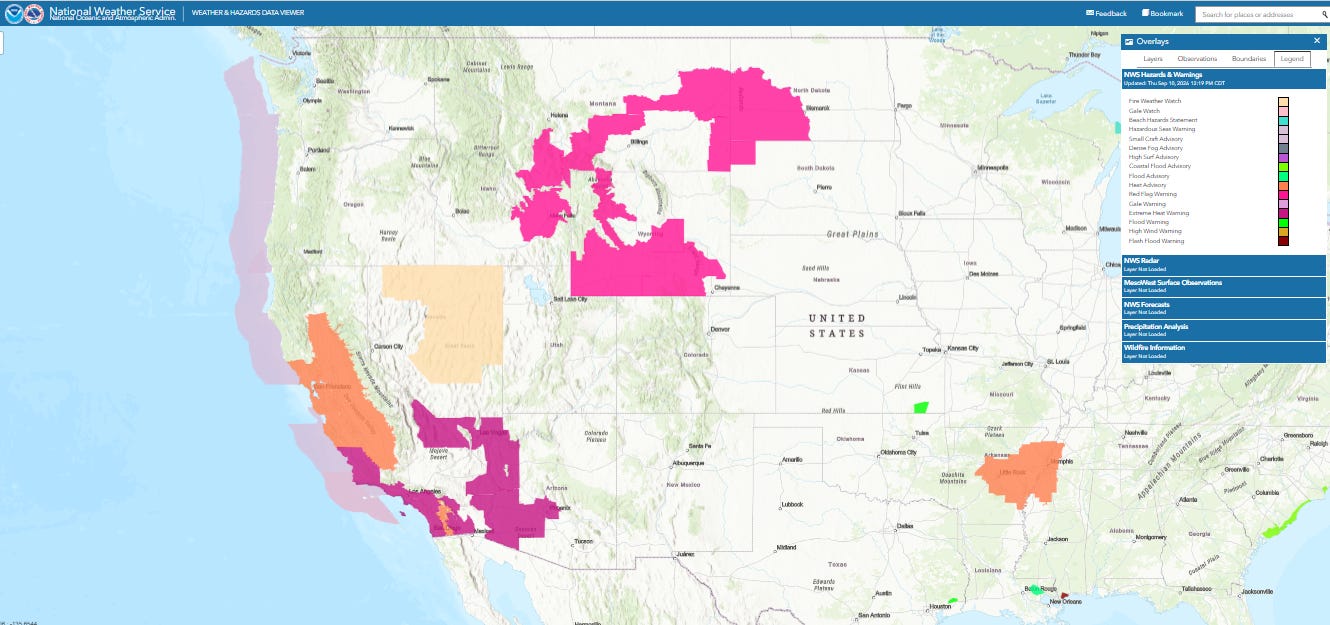
Today will see another day of unusual heat and humidity in the Southwest US, where extreme heat warnings and heat advisories are in effect. Areas from the Intermountain West into the Northern Plains have elevated wildfire concerns with the red flag warnings and fire weather watches in effect.


Leave a Reply